I don’t follow what you mean.
Morrillu: I’ve had 5 coffees…
I don’t follow what you mean.
Morrillu: I’ve had 5 coffees…
The R’s ADS behaves one way or another depending on whether it’s in Comfort, Sport, or R+ mode; however, the Si/Sport+ only has Normal and Sport modes—that’s what I’m saying. That the ADS ECU from a car with two operating modes works for one with three modes.
Alright, understood… time to dive into it, here comes a wall of text. It’s time to grab a cold beer to enjoy it slowly. Whoever makes it to the end has my blessings.
There are two types of control units (ECUs). One is shared by the FK8, FK8 Limited Edition, and the Integra. It has three modes to choose from: Comfort - Sport and +R.
On the other hand, there is a second control unit, shared by the Civic Sport+, the American Si Coupe and Sedan, and, curiously, the Accord (obviously, the version with adaptive suspension). These have two modes: Normal and Sport.
Are they interchangeable? Yes, but only between the FK8/Integra or between the Civic/Accord. You cannot install an FK8 unit in ours and vice versa, because the control unit works with much more data and you will either be missing sensors or have excess signals (I’ll post graphics later).
What have I seen people doing? Well, those who have an FK8 and have swapped springs for others (many for Swifts) install the Limited Edition control unit because the hydraulic damping rates are stiffer. In short, they jump up a step, meaning: Comfort becomes Sport, Sport becomes +R, and +R becomes a ++R. With this, they achieve higher hydraulic damping to control the pitching of the springs with a higher spring rate.
Then there are those who use the FK8 as a daily driver without modifying the suspension. What they do is install the Integra control unit because it drops a step: Comfort is more Comfort, Sport becomes Comfort, and +R becomes Sport.
In our case, it’s something similar. The Si has a tighter hydraulic setting (its stock springs are stiffer than ours), while the Accord is (I think) a tad softer than ours. I haven’t seen anyone with the hatchback install the Si control unit (I’ll be the first, or at least the first to shout it from the rooftops), but I have seen an Accord with Swift springs that installed the Si unit because the car had become bouncy. Logical, since its dampers couldn’t control a spring much stiffer than the stock one.
Following this, it has been mentioned here or on Telegram that our Civic with springs gains “pitching” (cabeceo). And it makes perfect sense; you’re installing springs with a higher rate and, additionally, making the damper move outside its optimal travel points (you’re losing upward travel because they are shorter). And in the case of the FK8, the dampers even have stroke sensors to know where they are and adapt their stiffness.
Therefore, the system always thinks it’s working compressed (in bumps or cornering loads), and the programming they have IS USELESS. Furthermore, and it’s no small thing, with less hydraulic damping, there’s more movement—and not just what you can feel; there are low-frequency harmonics that cause oscillations for more meters, when under normal circumstances, the correct damper with the correct spring would stop them.
That’s why the limit for lowering is little more than 20 mm, which is how the HKS came for you and what the people at Swift say, who are the only ones who have developed springs specifically for the adaptive dampers.
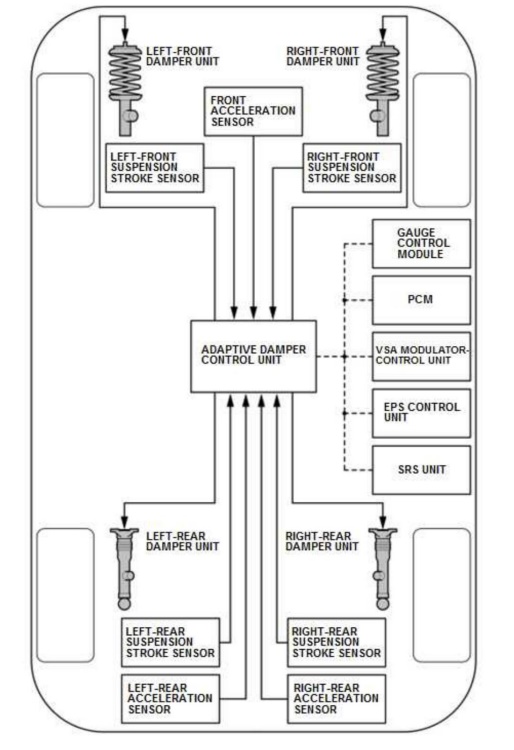
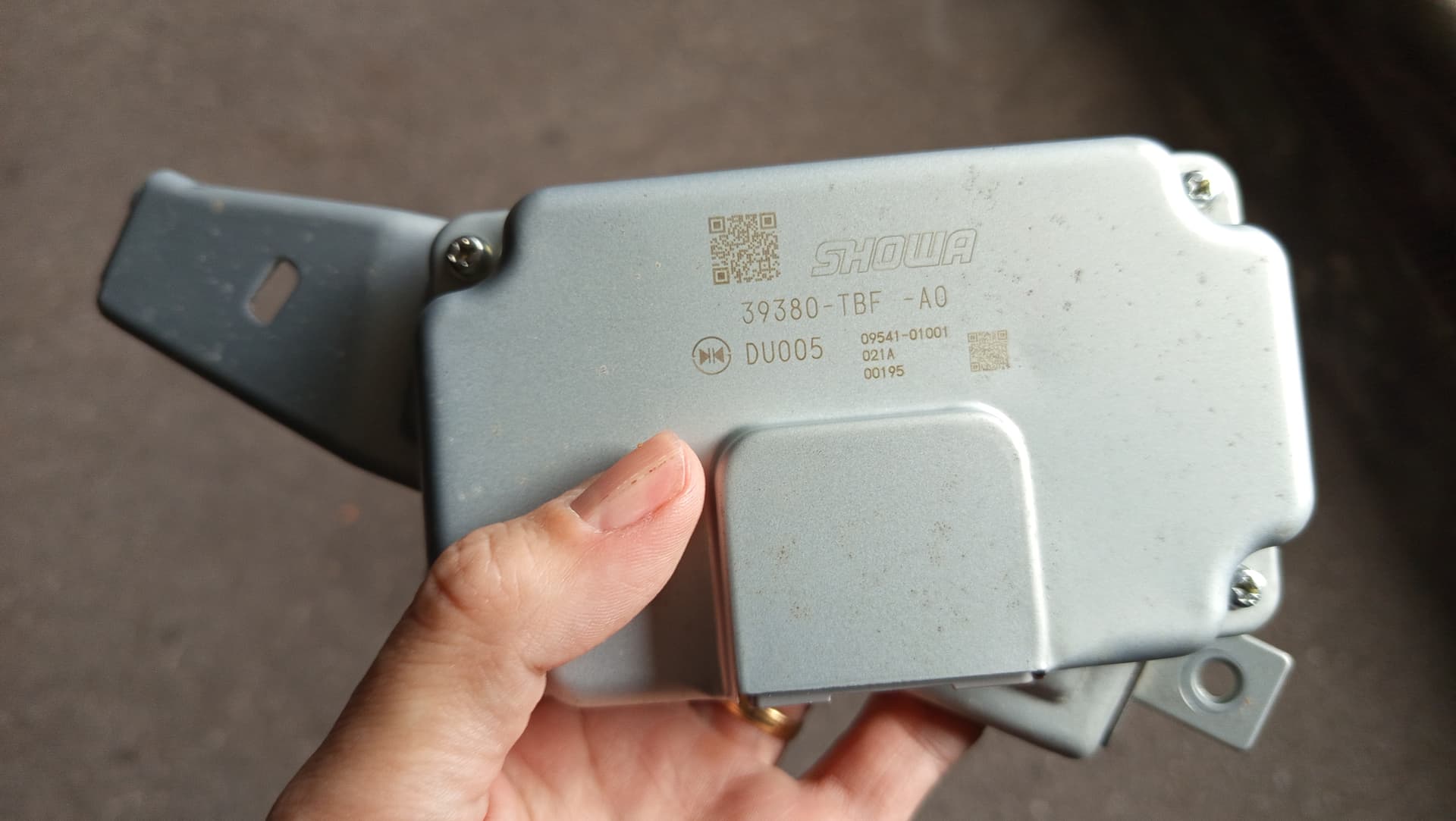
Now let’s go back to the beginning, to the control units. These are the signals captured by a Type R:
Well, with all that, a bit of salt, pepper, and “chop chop” on a low simmer for a few milliseconds, each damper adapts its stiffness and helps the car be very effective and, you could almost say, a bit of an Oracle—seeing where the hit is going to come from and correcting the “ham-fisted” driver at the wheel (i.e., me).
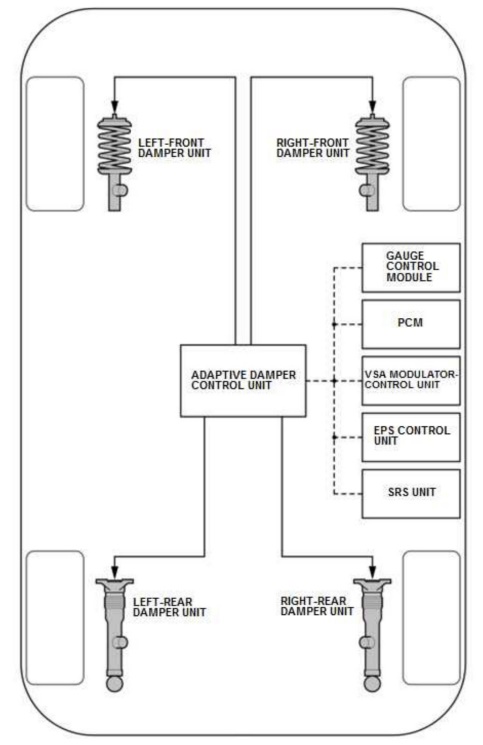
In our case, everything is a bit simpler:
Again, with these ingredients and the magic recipe, we already have a good three-course menu, dessert, and bread.
Now you can understand why each damper costs what it costs, and why it is as effective as it is on all types of roads. And most importantly:
Why my persistence in trying to optimize as much as possible without leaving the car’s OEM scheme, by practically making a Frankenstein fusion of a Hatchback and an Si on steroids. But always with a clear head, taking small steps and seeing that I’m going where I set out to… I don’t know, almost two years ago when I started looking seriously at the suspensions? More or less.
Morrillu: sorry if I bored you…
I’ll add one more little thing.
When the control unit arrives and I install it, I’ll probably test it for a few days and then revert back. I imagine that might surprise you, since I could just leave it installed. But no.
The reason is that with our current springs and a control unit that will make the dampers’ hydraulics more restrictive, in certain situations (rippled surfaces or fast bumps) it won’t allow the wheel to rebound as quickly as it should after compression, leaving the wheel without contact with the asphalt for longer. And that’s not good.
Once I get hold of the Si springs and they’re installed, then I’ll reinstall the correct control unit because then they’ll be working in harmony.
Morrillu: my wife already tells me it’s not just that I should be locked up, it’s that I shouldn’t be let out at all…
I understood little or nothing; I’m into watches, but your wife, as of this day, still expected a ring.
As you can see, I’m a better track engineer than a sim racer—let alone an actual “driver,” as you were able to see for yourself. By the way, we still have a pending plan for coffee, a drive, and some laughs…
This year we’re celebrating two decades together. She already knows my quirks.
Morrillu: she asked me if I had bought the car a gift 
Read and understood. So the shocks, not the springs, are the same for an Si and a Sport+?
Keep her, she’s a keeper.
I don’t have the scrap of paper where I wrote the numbers down with me, but although the part number isn’t the same in the middle letters, just like the ECU, the rest matches, so I take it that yes, they are the same.
It would be strange if they were different, considering that the ECU works. Since they are adaptive dampers that work by throttling the oil flow, you can do whatever you want with them. Magnetorheological ones would be a different story, where you have two positions (on or off) and if you wanted more stiffness, you’d have to play with the oil viscosity or the valve passage. In that case, they would definitely be different.
She’s earned her place in heaven—well, actually, hell.
Morrillu: she says that rock and beer are down there, and that’s enough for her.
Well, well, well… between yesterday and today (since I finished at 1 AM), I can say I’ve finally got something finished… AT LAST. With the latest Acuity mod, the Rocker, I’ve now installed everything I wanted to improve the shifter feel.
It’s not everything that could be installed (the short shifter is missing, which I swapped for the Poco Low for existential reasons I’ve already shared), but I do think it’s everything you can do to get a 10/10 feel for a daily driver, without the hassle of a full short shifter or a CAI—which, honestly, if you’re stuck in traffic with one, you’ll end up wanting to buy a CVT (wink, wink, wink).
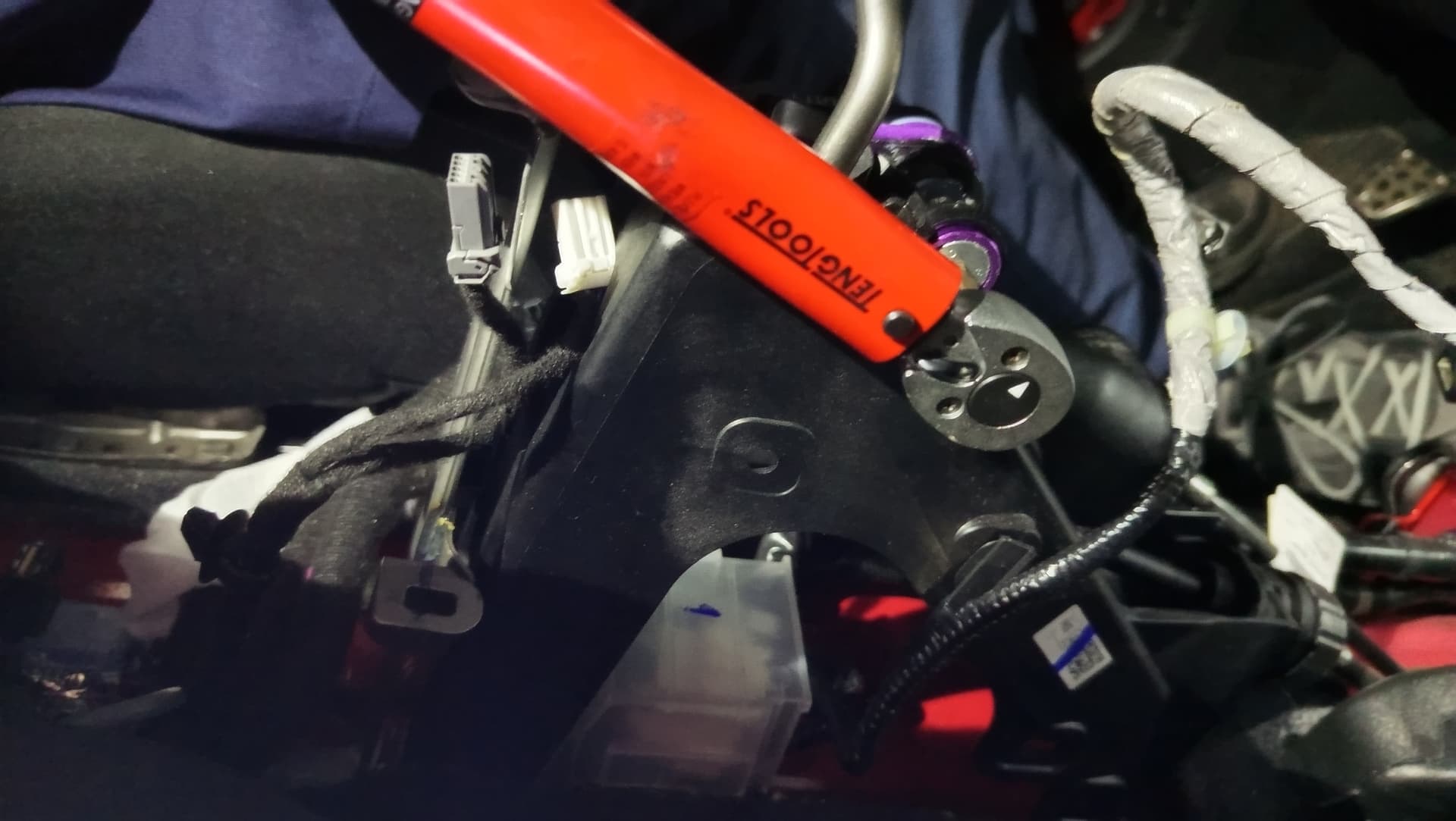
So yesterday, a bit before dinner and a bit after, this was the scene in the garage.
After a while, and after pulling out the torque wrench to tighten to 7.7 Nm… just so it’s done right, for that touch of class…
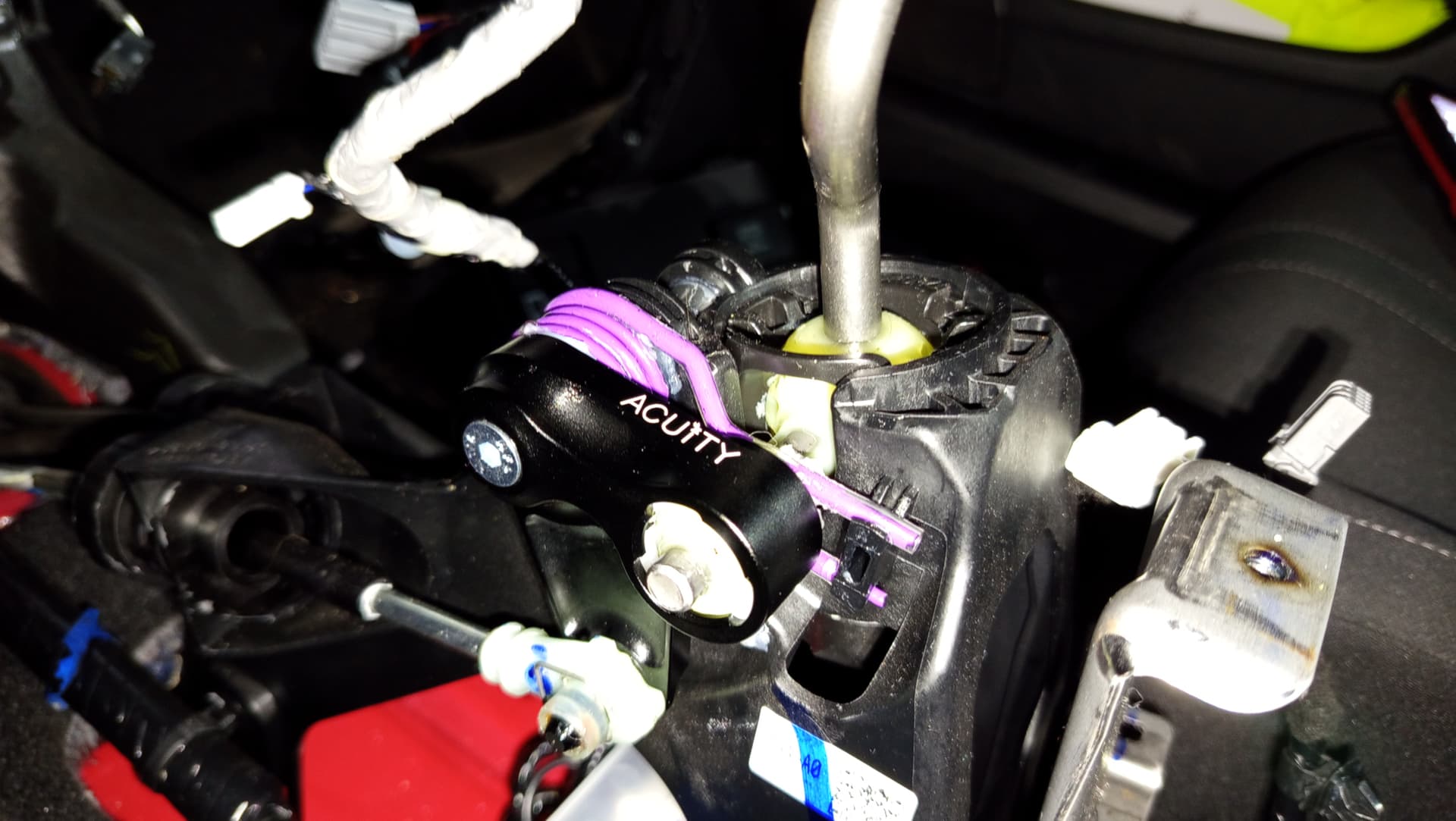
Now we have the Rocker cozying up to the spring and all the rest… I took the opportunity to add a little more grease.
And once it was all closed up, the advantage of living in Paradise is that after driving just 600m from the garage, I was already testing the car on 4km of all kinds of twisty roads, checking if everything was okay or if, instead, I’d have to call a tow truck because the gear lever came off in my hand. And no, nothing came loose.
My opinion? Perfect, sublime, orgasmic… I’m running out of adjectives. Everything I was looking for, everything I could imagine—thinking I’m the Adrian Newey of the local bar—everything I wanted is right there. The feel, the weight, the precision… even the sound is different: mechanical, raw but not harsh.
There’s only one thing I don’t like: in two days I’ll already be used to it, and I’ll lose that magnificent feeling I had when I got home and that I’m still buzzing from today.
Morrillu: and as @ital says, the old man’s car is still what it is…
Even if it passes, no one can take those two days from you.
When something is exceptional, it’s hard to get used to it, just as it’s hard for many of us to get used to your wonderful contributions as usual.
A hug, Captain Lentillu
PS: I’m eagerly awaiting more unnecessary data that 90-ish% of people will overlook for not including the hashtag #stage. Talk dirty to me about the rotational forces on the outer ring of the tire and how they are influenced not only by the reduction of unsprung mass but by its distribution within the radius of gyration, you slut.
Wow, you’re making me so jealous hahaha, how much did it cost you including shipping?
Well, I can’t really tell you, because I picked it up along with some other stuff from Two Step Performance. I needed a shop that had the Rocker, but also the transmission springs and the Verus brake brace, and it was the only option (avoiding three separate orders with three shipping/customs fees).
Hybrid Racing Heavy Duty Transmission - 17.95 €
Shifter Rocker Upgrade - 100.95 €
Brake Master Cylinder Brace Verus - 120.95 €
Customs: 28.56
Shipping and protection: 137.69
If you’re only getting that, I’d go to A4H or similar; you avoid all the hassle with customs and whatnot.
Figure about 200 euros with shipping.
Morrillu: damn, everything is getting so expensive since I started this project.
Your wish is my command:
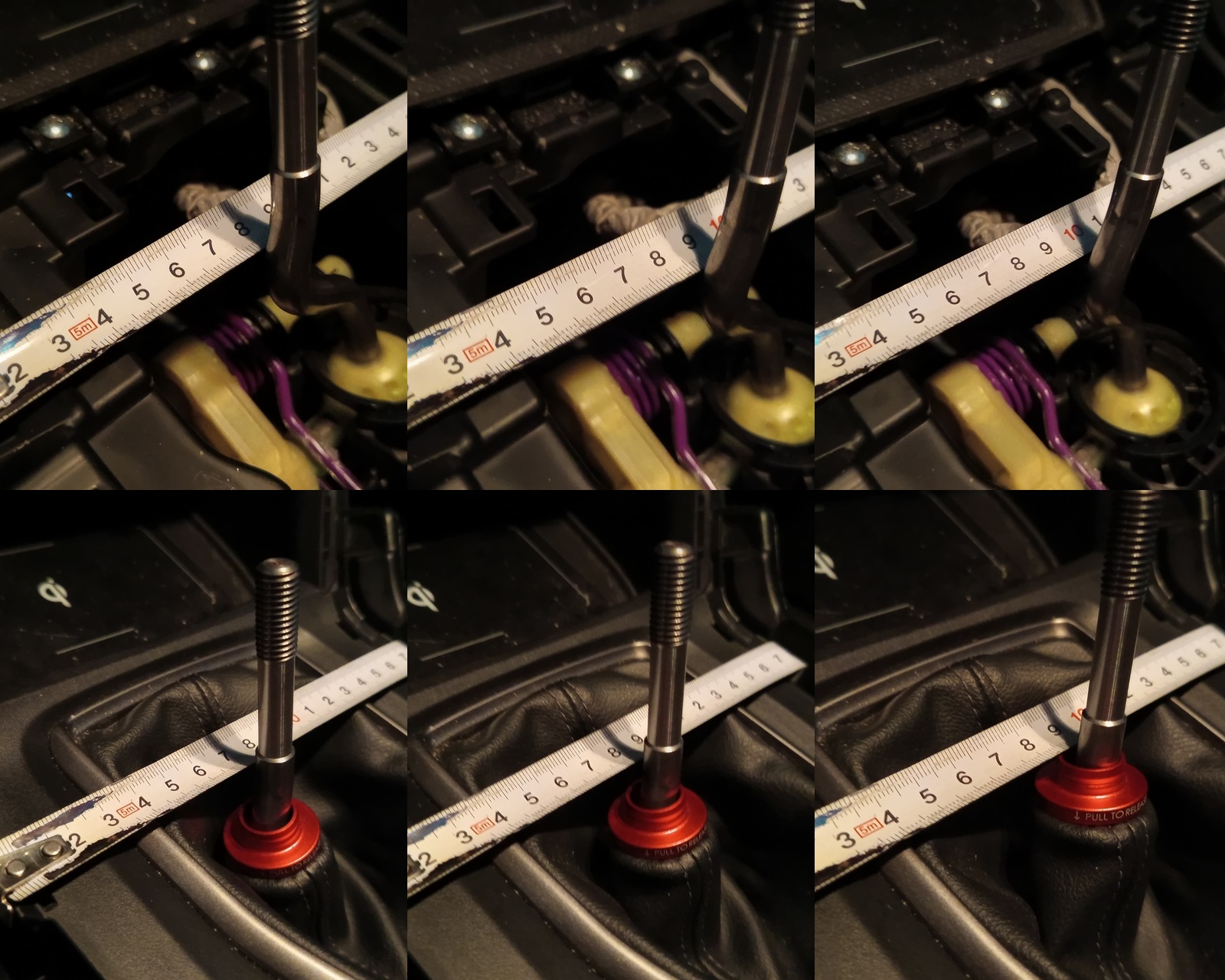
Just like I did with the Pocoyó knob, I took the trouble to take some measurements. And while it’s true they weren’t identical because in one I had the trim and the boot removed and in the other I didn’t (it was already late and I wanted to finish), what matters is that the measurement reference between positions is extrapolatable and helps to show what is actually gained. Because one thing is what it feels like, and another is what the cold, objective numbers say.
Stock, between the 1/2 - 3/4 - 5/6 gates, there is an approximate distance of 13 mm between each of them. That is, between 1st and 5th or between 2nd and 6th, we have to move the lever a total of 26 mm.
Once the Rocker is installed, the distance between gates is shortened to about 22 mm (we reduced it by 4 mm), or in other words, now we only need to move it 22 mm.
All this was measured, as you can see, at the base of the lever. Since the knob is higher and the pivot point is below, where we actually feel it when we grab the lever, the distance—though proportional—will be a bit greater. But it was more complicated to get exact measurements up there.
Morrillu: you can touch yourself now… french kisses
There’s nothing but vice in this thread. Dissolutes, libertines, debauchees!
Well, well, well, although I just realized that I haven’t updated what happened with the Adaptive Suspension Control Unit (spoiler: it goes wrong), I find myself needing to show you the latest upgrade I’ve acquired.
It’s a gadget that goes in the trunk, and it’s mainly useful for when we’ve reached our destination. Ideally, at a car meet, as it allows us to admire the rest of the vehicles without getting tired, and also adds a touch of quality and exclusivity. Placed next to the car, it looks perfect.
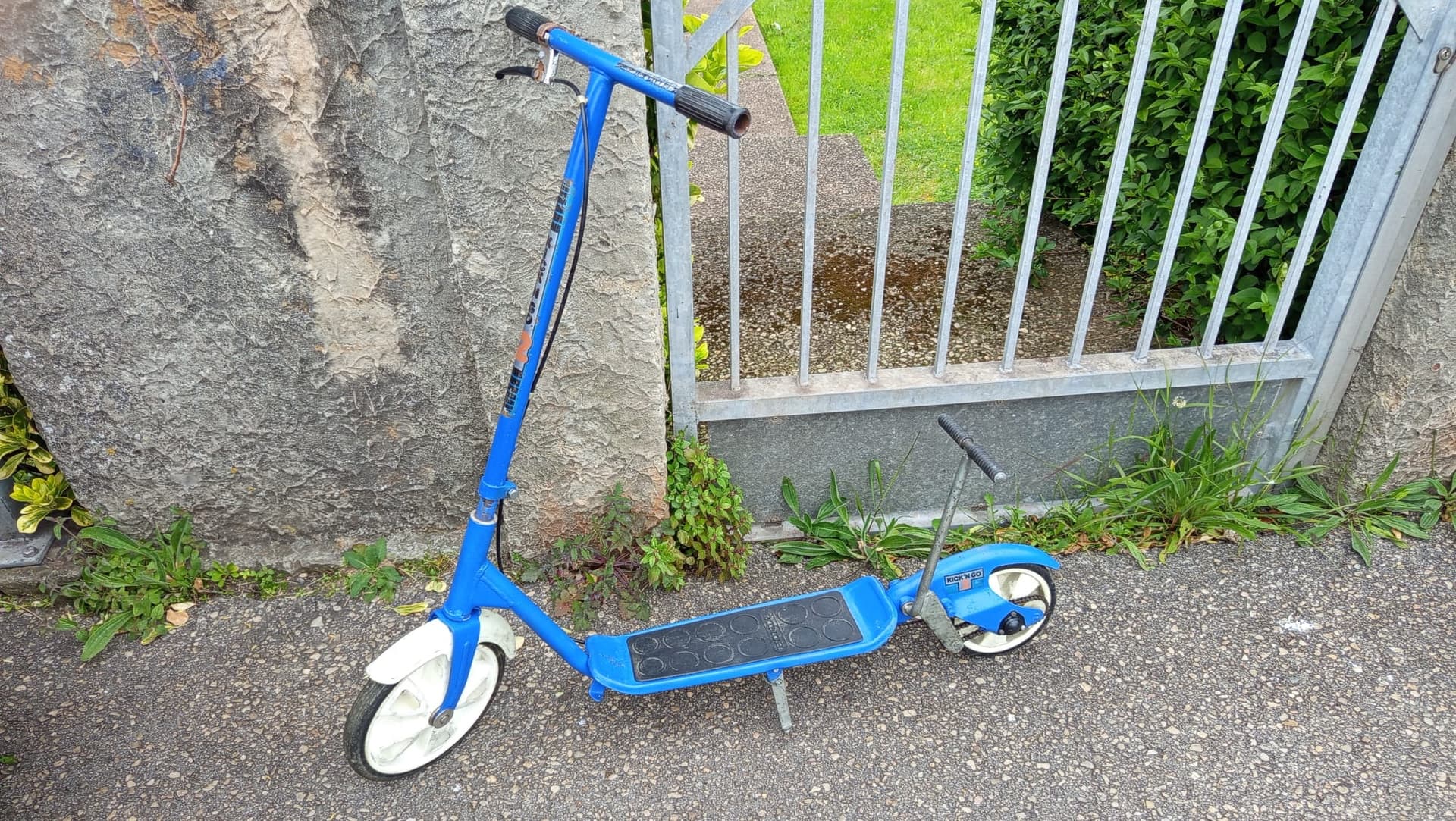
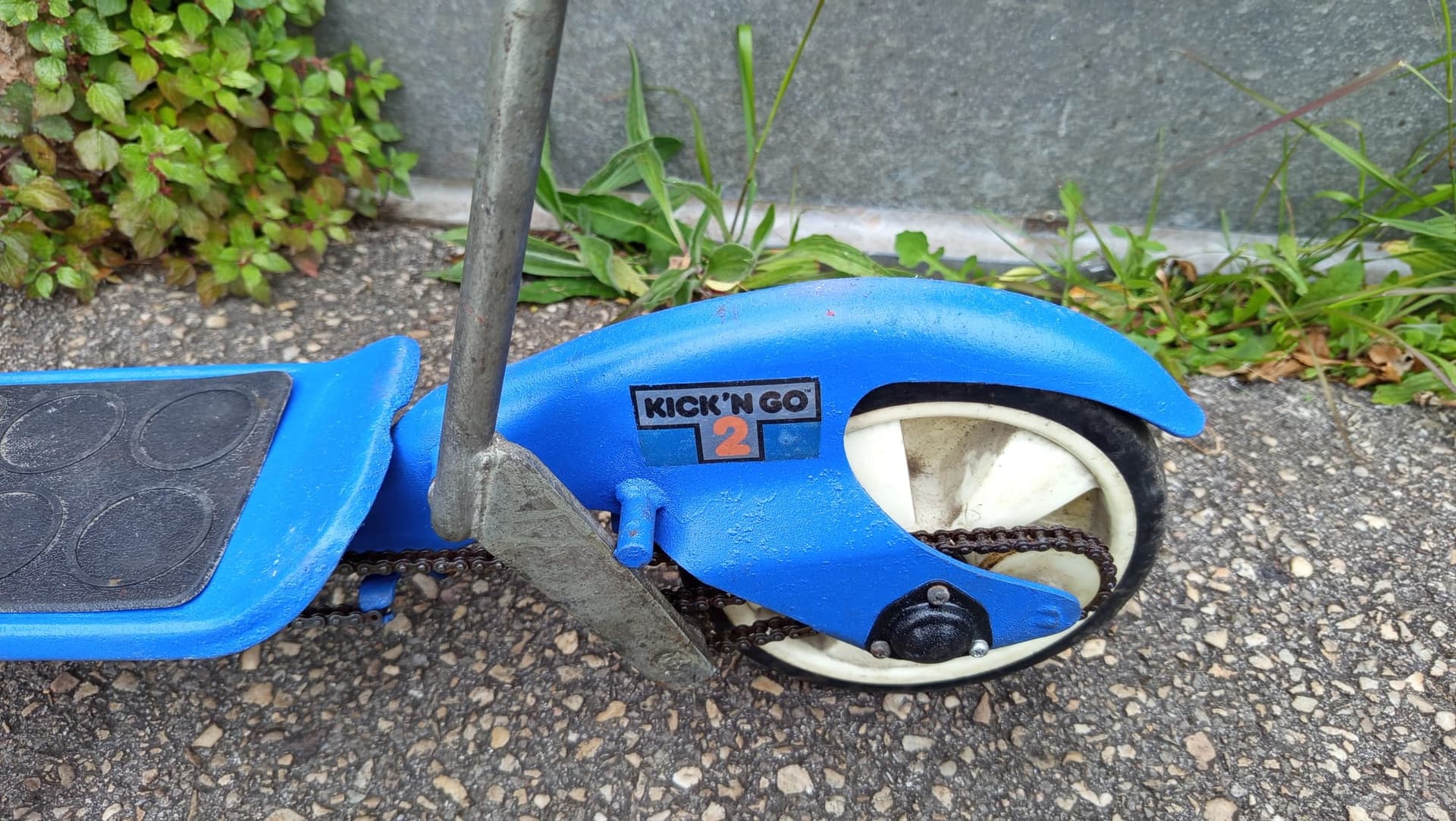
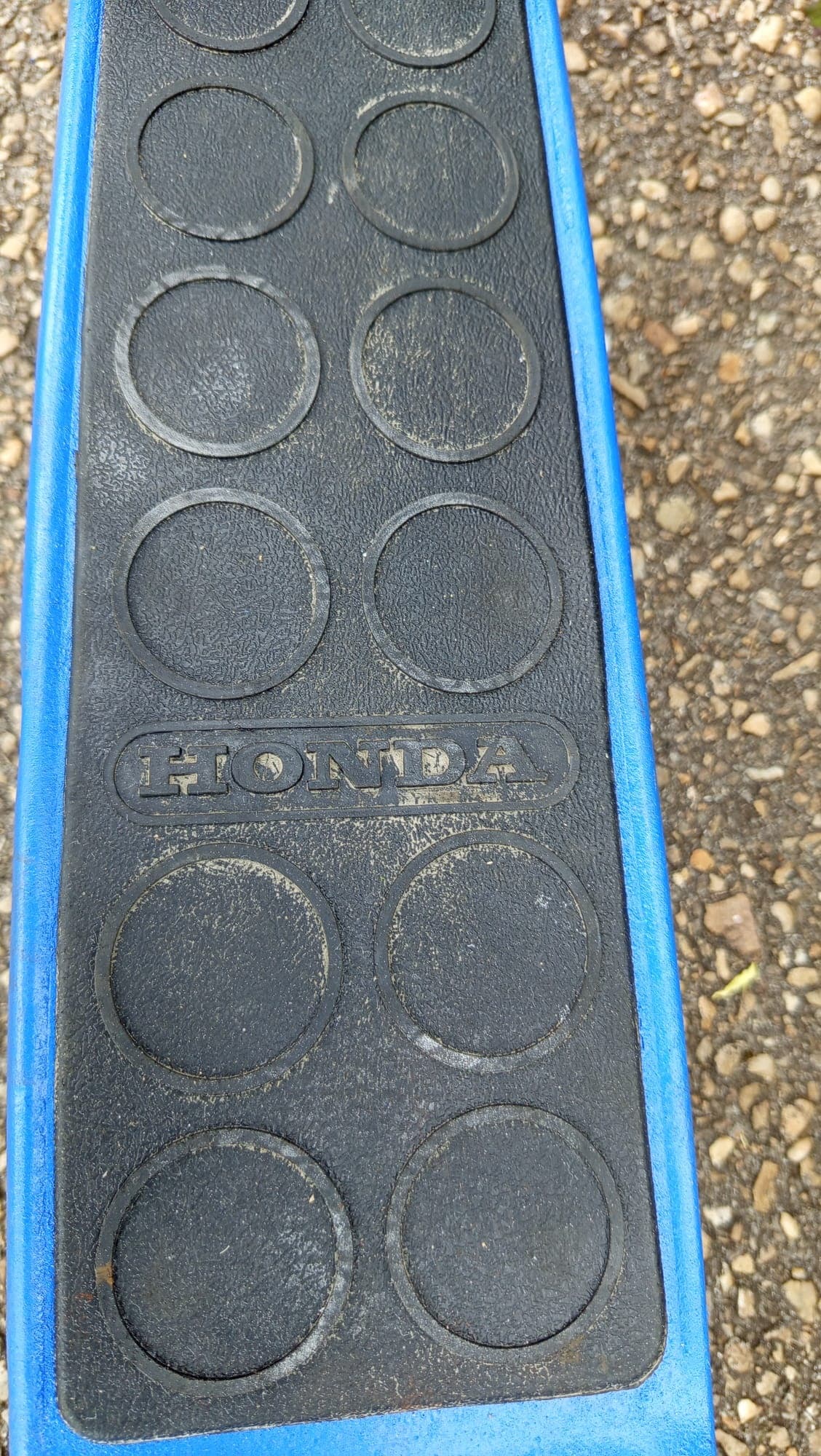
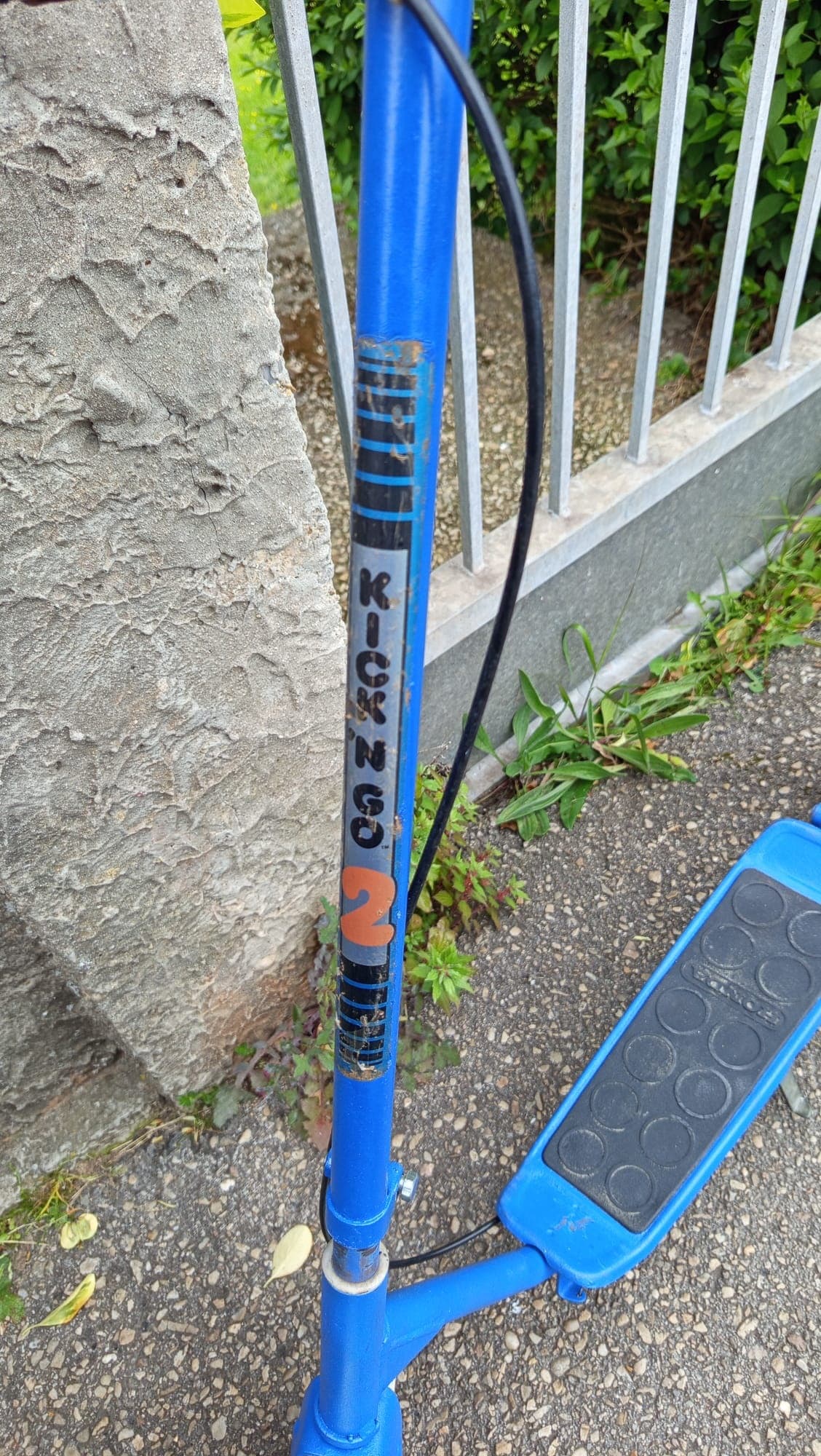
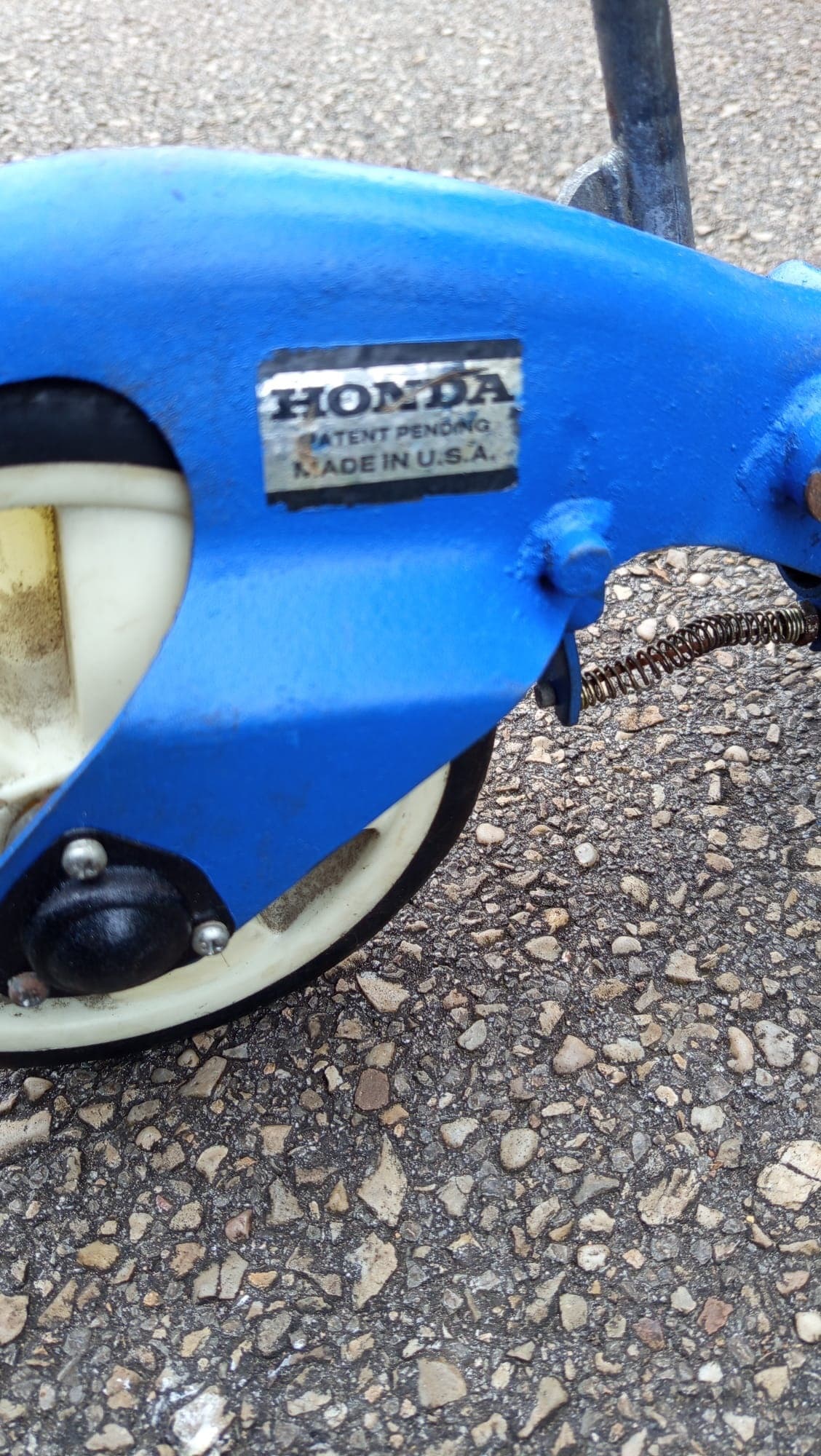
At this point, you must be wondering what on earth I’m talking about. It’s the Honda Kick N Go 2, a cool gadget that Honda released in the mid-70s and only marketed for a couple of years in Japan first and then the United States. It’s contemporary with the first generation of the Civic and emerged, as it couldn’t be otherwise, from an internal Honda contest to seek new developments, in this case designed for the children of people visiting a Honda dealership.
There were three versions. The first two, for children and adults, had two wheels in front and one in the back. The one I have, also for adults, has only two wheels. In all cases, the movement is through a curious and ingenious kick mechanism, which loads a spring and as it returns, transmits the force to the rear wheel via the chain, allowing you to move forward without needing to push with your foot. Additionally, it has a brake that acts on the rear wheel.
The ad from that time:

And this is how the propulsion mechanism works

And the photos of the gadget as it arrived. It needs a little tuning, but it’s in very good condition for being over 40 years old. Few rust spots, all the stickers, etc.
Morrillu: the next logical step, in my midlife crisis, will be to buy a Motocompo…
Wow!! Just when I thought I had seen it all… it’s a scooter ahead of its time, very good!!!
You already know how to sell the car and be eco-friendly by moving around on the scooter, I can already see you on the hills of Candas.
© CivicXClub - 2026