I watched the video and I’m stunned, how can you go around with the belt so loose? Didn’t you take it to Honda?
1 Like
Well, imagine how I felt. I took off the valve cover to see if the noise was coming from there, and when I touched the belt, a wave of heat went up my back… I backed away slowly and haven’t moved it a single millimeter since.
I’ve been lucky—no, beyond lucky. Because I’m telling you, I’ve been driving like this for about 4 months with that damn noise, and since it wasn’t getting any worse and I’m pretty broke and didn’t want to get ripped off at Honda, well…
But I learned my lesson the hard way…
1 Like
Well, I finally managed to open that damn cover and check the condition of the belt tensioner on my Civic. It turns out it wasn’t loose, but broken. The spring that tensions the pulley snapped. Luckily, the pieces stayed inside the tensioner.
For your information, the cover gives access to the belt tensioner, and with a small mirror or camera, you can see its condition and the belt’s, and adjust it if necessary, but you can’t take it out because the space is too small, so I’ve had to disassemble everything as if I were changing the belt 
Due to my precarious financial situation, I only have enough to buy the new tensioner (€139), and I’m going to keep the same belt, as it still has some service life left and is intact. Also, since I had to remove the VTEC actuator on the side, I checked and the small filter it has is completely clean, with no rubber shavings or anything like that, so…
I’m more and more glad I chose a Honda. With a breakdown of this magnitude, another car wouldn’t even make it 10km.
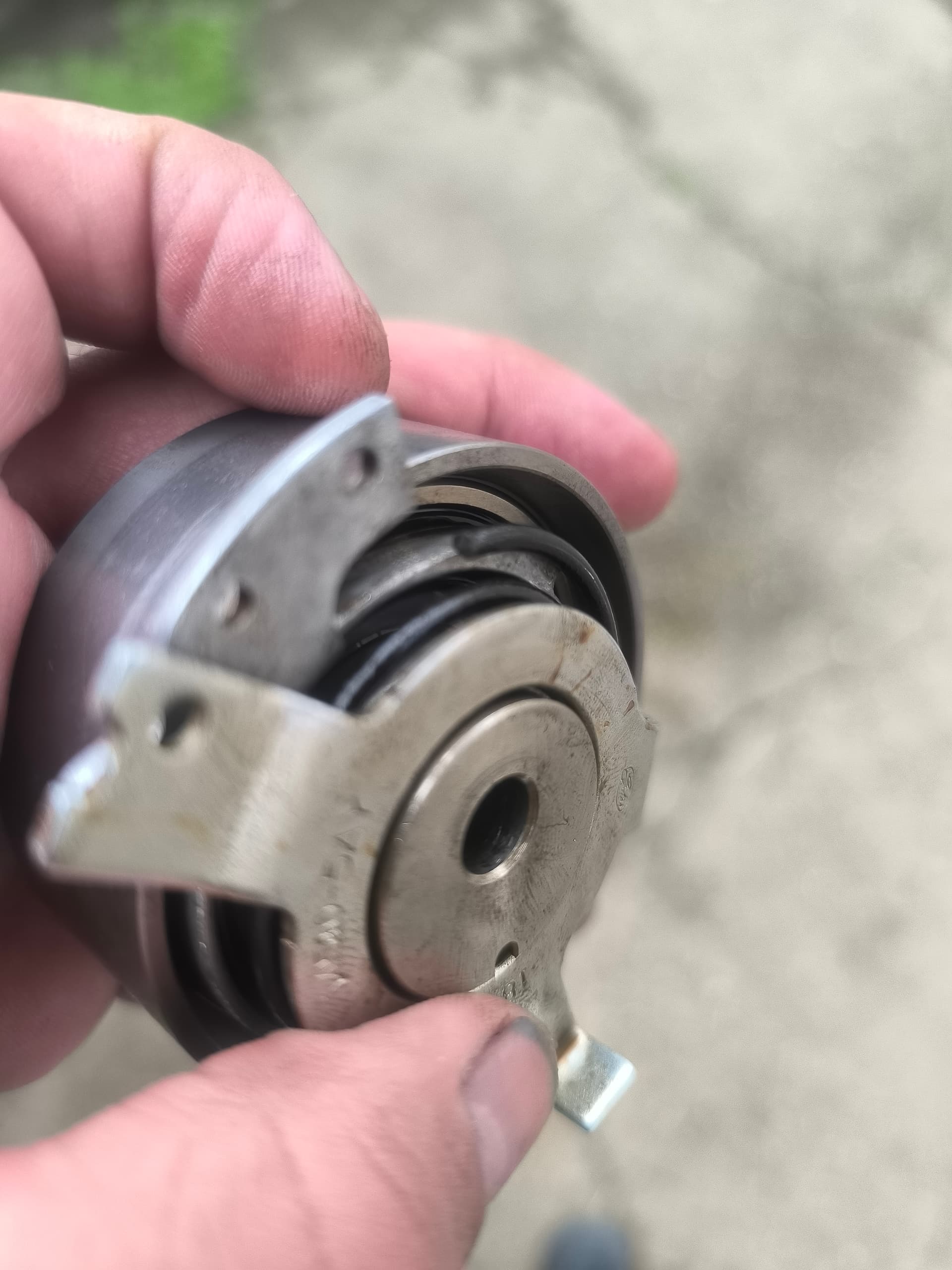
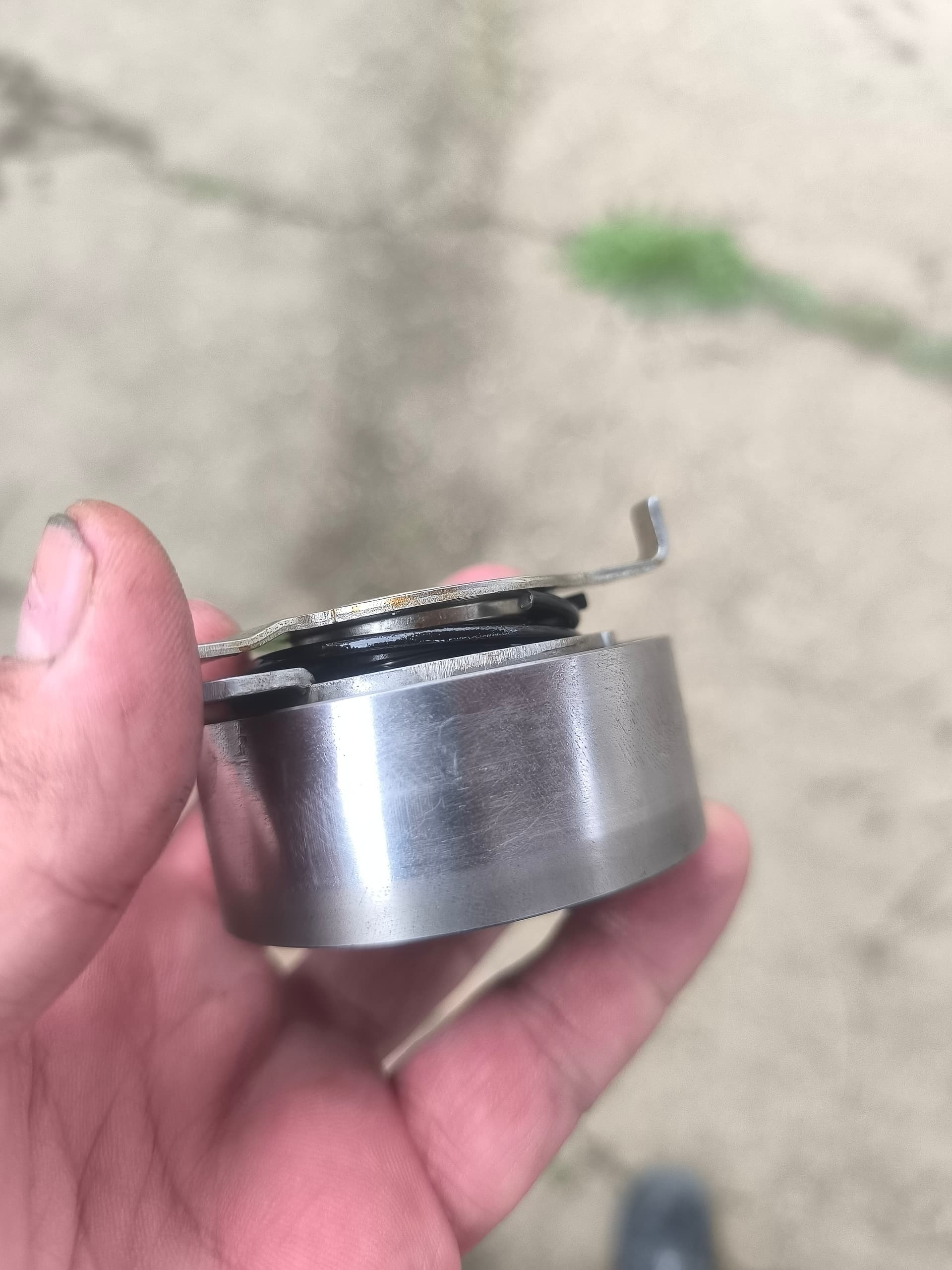
5 Likes
Well, the tensioner’s been replaced and the noise is gone. That was clearly the problem. I’m adding the link to the previous post where there’s a video of the noise, in case it happens to someone else.
5 Likes
Glad you sorted out the problem, in the end a Honda is a Honda (with its quirks). We’ve had many brands at home, but ever since the 8th gen Civic 2.2 i-CTDi arrived and left with 320,000km and only the clutch was replaced… we haven’t switched since 
3 Likes
I dropped my car off yesterday for a belt change. I asked if it was the same as the original one, and they told me no, but they didn’t give me much of an explanation (I don’t think they knew) as to what has changed. I imagine it’s the compounds, but I can’t find anything online.
1 Like
What quote did they give you? I’m due for a change in October and from what I’ve seen, prices vary from one Honda dealer to another.
2 Likes
A gazillion dollars, because the plan was to trade the car for an HR-V
Morrillu: 
2 Likes
But in the end, I’m not changing it. 
2 Likes
To tell you the truth, I haven’t even asked. I trust them, basically. It’s not like I have money to burn, but no matter what they asked for, I had to get it done and I knew for sure I wanted them to be the ones to do it.
1 Like
I have the price: 976 plus VAT, as expected.
4 Likes
I paid a lot more this summer… what’s this about you wanting an HR-V? If it were a ZR-V… which is a “lifted” Civic… I could see that, but the HR-V… it’s for the missus at most :-p
2 Likes
That’s why I didn’t take it; financially it was very attractive, but I don’t like it. I like my Civic, and I don’t like the new Civic either—maybe I’m just weird.
As for the belt, I asked to see the one they removed, and the truth is it was like new, with no cracks or nicks.
I had the annual service done, and they mentioned in the report that the brake pads are halfway through their life.
1 Like
Is the belt they use when replacing the timing belt the same as the original, or do you know if it’s a different version designed not to degrade with the oil?
1 Like
For God’s sake, it’s not Puretech…
3 Likes
According to them, it’s different.
1 Like
Honda isn’t Stellantis… we don’t have problems with gas mixing with oil and degrading the belt because of the “anti-emission” system
3 Likes
Oh really? Any direct injection engine leaks gasoline vapors into the crankcase. Belt materials, maintenance intervals, or whatever else you want to say is a different matter.
Morrillu: smell the oil dipstick and let me know…
1 Like
Yes and no, Stellantis didn’t invent direct injection, and belts have been snapping ever since. Direct injection has been implemented for over 30 years; in fact, all diesel vehicles use direct injection and you’re never going to change the oil in an engine and find 1 liter of diluted fuel. Under normal operating conditions, the correct amount of fuel is injected for combustion, which is why terms like rich/lean mixture exist. The amount of fuel that can dilute under optimal engine operating conditions is minimal and not harmful at all. However, the fact that Stellantis engineers thought it would be a good idea to meet emissions standards by occasionally injecting more fuel than necessary—to raise the temperature of the particulate filter and keep it clean for longer—only for part of that excess injection to end up in the crankcase and degrade the belt, shows that it wasn’t such a great idea after all. What’s happening with Honda engines? No… as long as you change the oil when the manual says (as with all cars and brands, poor maintenance can lead to breakdowns). Is there oil dilution in cold countries because when the car starts from cold and the sensor detects the ambient temperature it starts injecting excessive amounts? Yes, but they also have different maintenance guidelines to avoid problems, and if there are issues, they take responsibility for them. Stellantis has been dodging the issue until they finally had to change the engine design and replace the engine for a ton of customers…
P.S.: I always keep my replies brief, but I’m never short on knowledge and arguments. I think we’re here to help rather than to argue.
7 Likes
I’ve been able to see the impeccable condition of the belt after 4 and a half years (mine is from 2020 too) and the various car filters—not a single speck of dirt.
It’s definitely not the same. 
1 Like