Maintenance and proper use of the i-DTEC engine

Let’s disregard the Filipino Honda information which, according to you, without any certainty and without determining if the cars are different, is not valid.

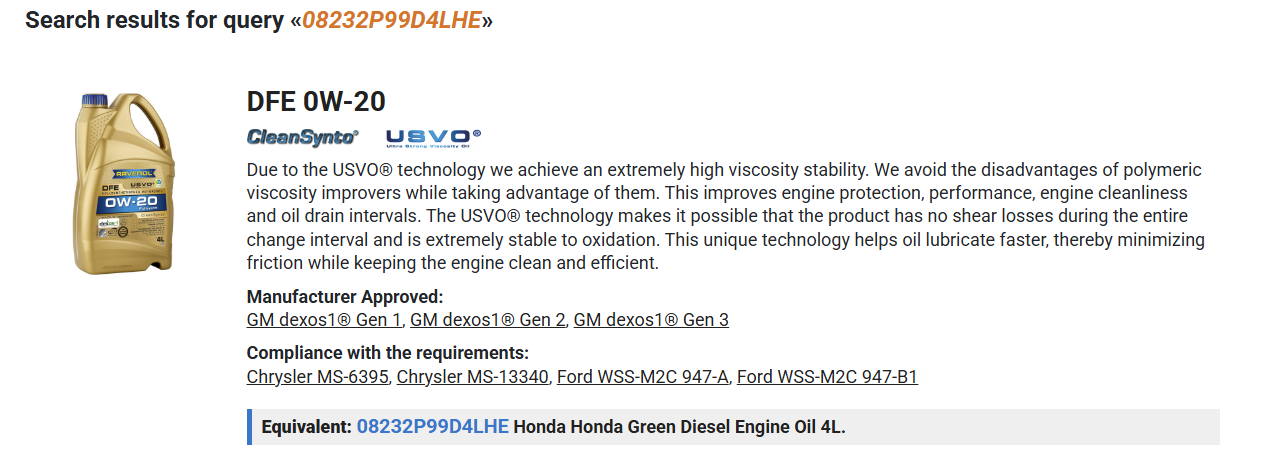
Indeed, I am using the green diesel oil code for the 4L version: 08232P99D4LHE

We have determined according to a European website that it is a 0w20 with absolute certainty. By finding the equivalent from its European manufacturer:

We know for sure that those who used 0w16 here in this forum did not have their engines explode and are still running. They determined that the engine and consumption work better for them. (I imagine Spanish and European users). Let’s keep investigating but let’s not dismiss these certainties. And if possible, provide reliable information that what Honda says in the Philippines is not valid for Europe.

1 Like

If that information about Ravenol showing up as 0W20 with the DFE was given by me xD. But it also contradicts what we first saw here, that reference in another document from the same Ravenol appears as a “0W16 without a label”; look at page 17 https://www.ravenol.al/fileadmin/content/documents/pdfs/Ravenol_EFE_SAE_0W-16__en.pdf Which of the two references do we follow? For me, the DFE one is more reliable, but that’s just me… It’s quite clear that it has to be lower than a 0W30, but I don’t see anything certain about what it is.

In the Philippines, they don’t follow the European anti-pollution standards. Specifically, the 1.6 iDtec of the Civic IX and X are called N16A1, while the one in the Philippines (and India) is the N16A5. You can see it on Wikipedia: Honda N engine - Wikipedia they are probably internally the same, but there can always be changes. They are different markets, this might mean something or it might not, but for me, there’s nothing certain, especially since the information seems different from what we have here.

Regarding those using 0W16 declared as such, as far as I know, only Dingo with the Mannol, right? I don’t recall more cases here of people using 0W20 or 0W16. Anyway, to really check that an oil isn’t harming the engine, a lot of time would have to pass. If there were wear from using oil that’s too thin, it would normally be light and might be noticeable after 50,000 km or more. It also depends a lot on the usage; if the oil is used gently, it doesn’t heat up as much to become so thin as to cause damage.

1 Like

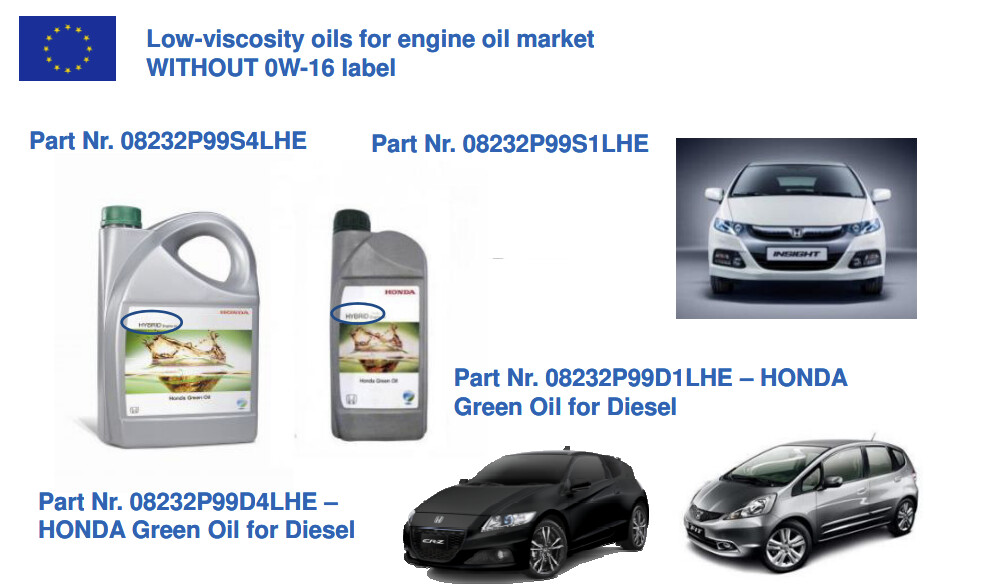
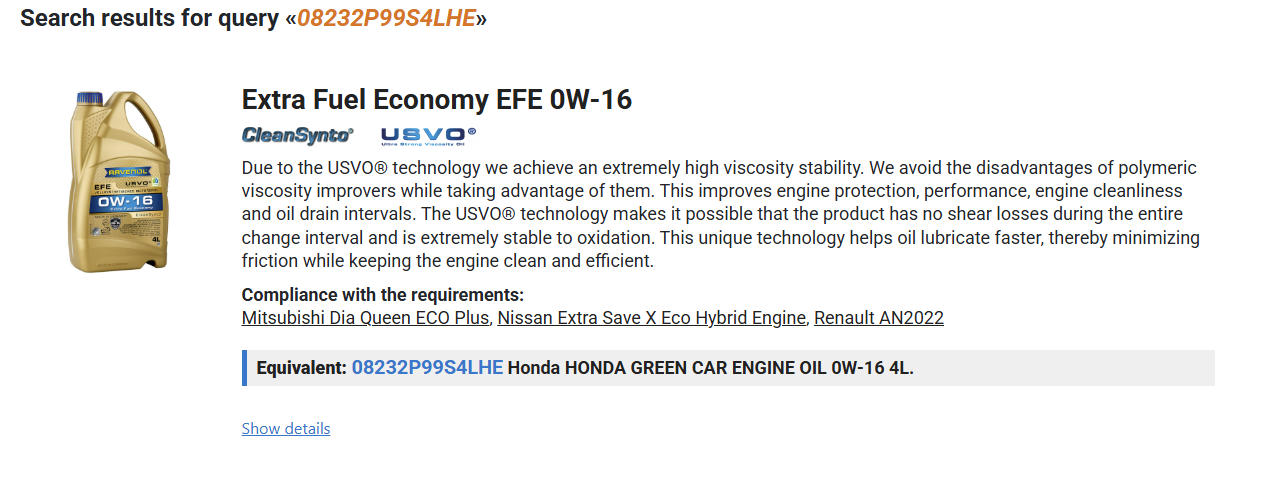
You don’t get it, bro, and I keep insisting on telling you that 0w16 is the new version of the green diesel oil. Its reference is this: 08232P99D4LHE instead of this: 08232P99S4LHE, and its equivalent in Revenol is this:

Your own PowerPoint explains it with European information, not Filipino. And the Filipinos are telling you the same thing. But you got confused by saying it’s a mid SAPS and other nonsense, questioning that the manufacturer itself tells you it’s a low SAPS.

That’s why I’m telling you that you can use the 3 oils: 0w30 specified in the manual, 0w20, and 0w16.

I can understand if you say: No, no, that’s for the hybrid. Well, fine, use the 0w20, and you won’t miss the mark.

1 Like

I don’t understand half of what you’re saying :sweat_smile::rofl:.

If you can’t differentiate between a mid SAPS and a low SAPS… I’m not getting confused about anything. You can look up information from ACEA; mid SAPS is less than or equal to 0.8% ash while low SAPS is less than or equal to 0.5%. The thing is, many brands for commercial reasons say low SAPS (when it’s actually “worse” oil). But I guess we’ll listen to ACEA here, I don’t even know if you know what ACEA is… Although I suppose you prefer to go by what the Filipinos say.

And regarding the PowerPoint, both the hybrid and diesel references appear in 0W16. That’s why I say that the reference 08232P99D 4LHE appears in Ravenol in both viscosities. So stop making up nonsense, the Honda oil diesel reference is in 0W16, 0W20.

2 Likes

I will take some time to clarify errors I discovered thanks to @Aluvius95 and the more advanced grok AI than the rest.

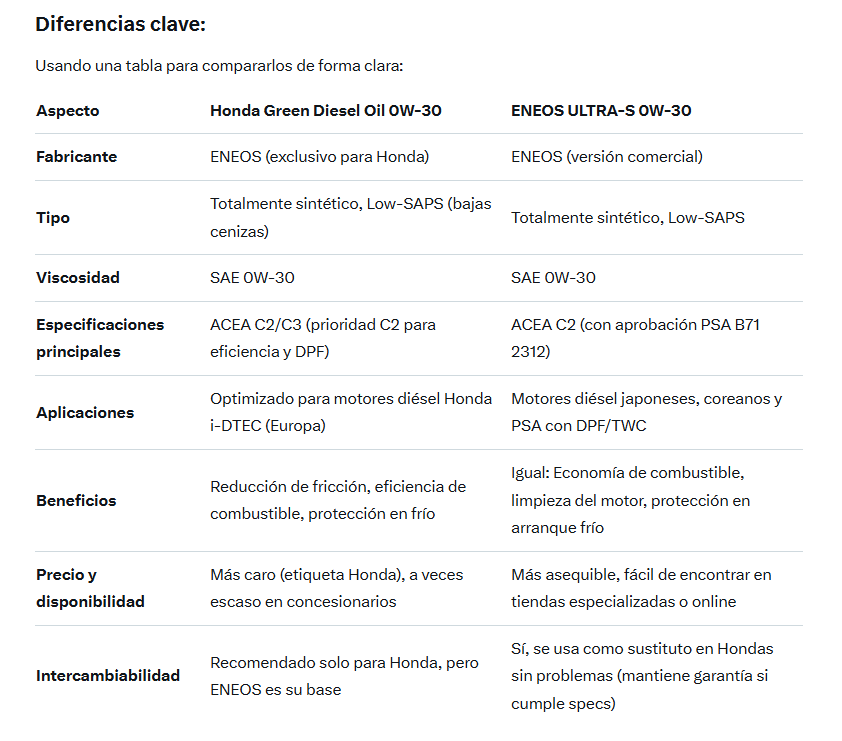
The authentic “Honda Green Diesel Oil” only has ONE viscosity: 0W-30 (Full product name: Honda Diesel Oil 0W-30 ACEA C2/C3 or “Honda Green Oil 0W-30”) Common official Honda references:

  • 08232-P99-D1LHE (1 liter)
  • 08232-P99-D4LHE (4 liters)

This is the only oil that Honda sells and has sold with the “Green Diesel Oil” label for its 1.6 i-DTEC and 2.2 i-DTEC diesel engines (Civic, CR-V, HR-V, Accord, etc.) from approximately 2013 to today (2025). Where did the other viscosities I mentioned come from? They were my mistakes in mixing different products:

  • 0W-20 → It is the “Honda Green Oil” but for gasoline and hybrid engines (Type 2.0, Ultra Green, etc.). It is not diesel.
  • 0W-16 → It is another green oil from Honda but only for the latest gasoline/hybrid engines (for example, the 2.0 e:HEV of the Civic 2022+). It is also not diesel.

Therefore, when I talk about Green Diesel Oil, the correct and only viscosity is 0W-30 ACEA C2/C3.

The Honda Green Diesel Oil 0W-30 (and practically all “Honda Genuine” oils) is not manufactured directly by Honda but produced by major oil companies under an exclusive contract for Honda.

Who actually manufactures it?

  • In Europe (including Spain and most countries where Green Diesel Oil is sold): It is manufactured by ENEOS (the largest oil company in Japan, owned by JX Nippon Oil & Energy). ENEOS has been the official supplier of all “Honda Genuine” oils for the European market for over 15 years.
  • In Japan and some Asian markets: It is also produced by ENEOS, but with slightly different formulations.
  • In the United States and Canada: There it is manufactured by ConocoPhillips or Idemitsu (depending on the year), but that oil is different (it is not the Green Diesel 0W-30).

How do we know for sure?

  • In the official technical sheets of Honda Europe, the ENEOS brand appears as the manufacturer.
  • The batch codes and original drums have internal references from ENEOS.
  • When the Green Diesel Oil started to become scarce (2022-2024), Honda temporarily authorized the ENEOS ULTRA-S 0W-30 ACEA C2 as a direct substitute, which is literally the same oil but with an ENEOS label.

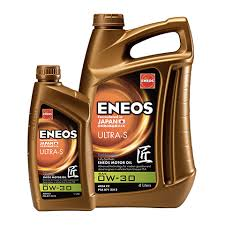
Clear summary: The Honda Green Diesel Oil 0W-30 = ENEOS manufactured exclusively for Honda It is the same base oil and additives as the ENEOS ULTRA-S 0W-30, but with a green Honda label and a considerably higher price. That is why many workshops and advanced users, when they cannot find the original, directly use ENEOS ULTRA-S 0W-30 C2 without any problem (and at half the price).

ENEOS ULTRA-S 0W-30 - ENEOS

To avoid extending, I can explain why the codes appear in ravenol, but in short, it is a promotional trick because it has some properties of the green diesel oil.

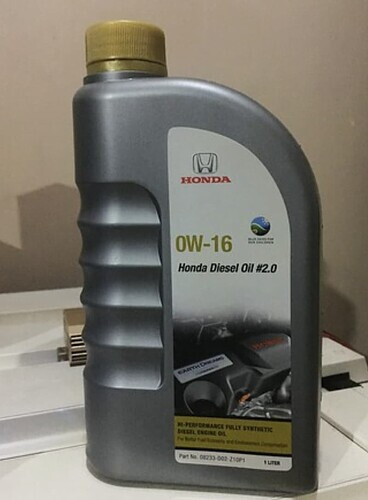
This oil is a special edition 0W-16 for very low friction diesel engines, launched by Honda only for some Asian markets (mainly Thailand, Indonesia, and Malaysia) from 2020-2021 and for very specific diesel engines (especially the 1.5 i-DTEC of the Asian Civic and some new generation Thai CR-Vs).
6 Likes

Stop listening to AI :joy::joy: especially Grok. It doesn’t even give you any kind of explanation. It provides no source for it being 0W30 and on top of that says it’s C2/C3 (which are actually C3). All it did was find that for that engine the secondary recommendation is 0W30 C2 and then C3, and it just made up that the Honda Green Diesel is that.

And saying it’s Low SAPS… Low SAPS are ACEA C1 and C4. The rest of the ACEA ‘C’ specs are Mid SAPS.

Come on, as if Grok is going to be more reliable than references from top-tier oil brands like Ravenol :upside_down_face::upside_down_face:

AIs rely on existing information; if you don’t provide it (or give them whatever you “feel like”), they’ll just grab whatever little they can find that might fit.

If you want to confirm what oil it is, you need an analysis or actual information provided by Honda, not those assumptions.

2 Likes

There’s a new reference for the Diesel Green Oil 0w30, I’m leaving it here in case it helps you find more up-to-date equivalents.
Honda link: https://www.honda-parts.eu/es/coches/piezas/lubricantes/aceite-de-motor/aceite-motor-diesel-verde-4l

08232-P99-D4LPRO

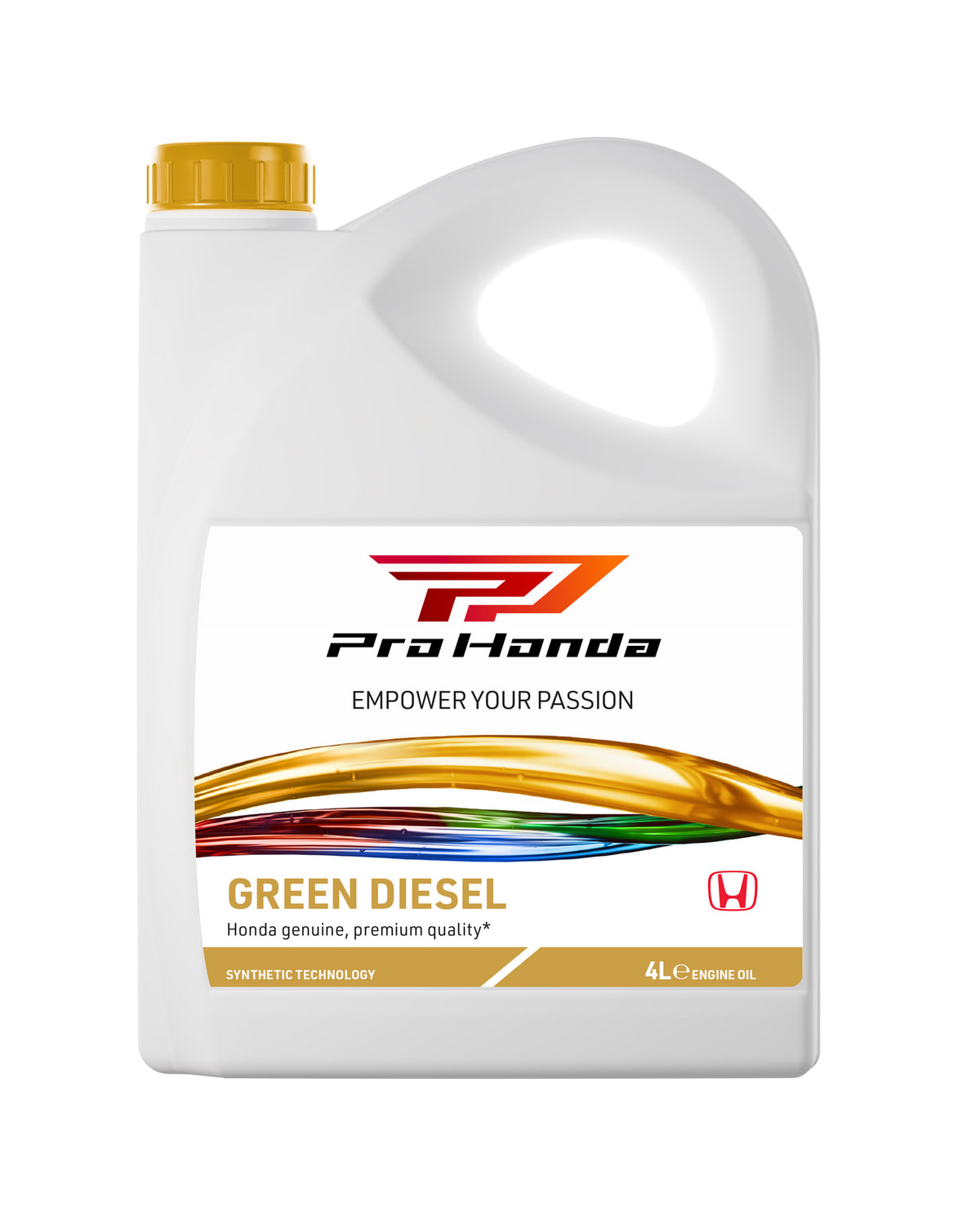
And the new packaging design

2 Likes

Hi.

That’s not the Green one; as you can see, it doesn’t have any reference to “Green.” That’s the “normal” 0W30 C2. What’s more, in the link you shared, the 1.6 i-DTEC doesn’t appear in the list of models (only the 2.2 i-DTEC ones show up).

The Green one, with the new design, is this:

08232-P99-D1LPRO
08232-P99-D4LPRO

With these new part numbers, I’m going to try to find data sheets, SDS, or whatever, or email distributors to see if they can send me something useful.

"…with the lowest

1 Like

You’re right, I was looking at the new formats and I got the links mixed up.

2 Likes

This mystery is most interesting; I can only confirm that the manufacturer isn’t Ravenol, but a simple competitor.
As for the density, no clue.

https://2407.pl/en/honda-brand/auto-part-08232-p99-d4lhe-33052805/

This European website, a Polish one, lists it as 0w16. It’s the only European site I’ve seen so far that indicates it. Is it 100% reliable? No idea, man. Either you send it off for analysis or the mystery will live on xD

1 Like

By the way, so there’s no doubt that Eneos is the manufacturer, I’m adding the definitive proof.

Just look up the SDS for Honda Green:

Go to page 11:
Manufacturer/Supplier: JXTG Nippon Oil & Energy Corporation

It is the former name of ENEOS, as the company rebranded to ENEOS in 2020 following the merger and rebranding).

3 Likes

Hi. I won’t say anything about the manufacturer, I didn’t think it was very relevant for me haha, but yeah, it’s Eneos.
At least I see it’s Japanese. Although their oil selector is absolutely terrible…
Anyway, back to what I was saying:

I requested the SDS and data sheet from Honda UK (they brushed me off, saying I should ask someone else) and from Cox Motor Parts, who sent me the SDS for the previous one, which is the same one you shared. They say they don’t have a data sheet and that the new green oil diesel is exactly the same product (and therefore SDS) as the previous one.

So, nothing new there. I still think it’s a 0W20 or 0W16; based on the SAE J300 table, it could even be both: with a cSt at 100° of 6.9 to 8.2, it would fall into both viscosities.
More and more people are using 0W16 or 0W20 and are happy with it. In the next change, I’ll use 0W20.

2 Likes

I’ll try the Eneos 0W-30, which has the same additives as the Green. I’m just waiting to confirm the viscosity of the Green.

As long as the engine stays quiet, that works for me. Such low-viscosity oils achieve fuel savings and lower emissions, which is what European regulations and standards favor. On the other hand, they don’t protect the engine as well, especially in hot climates or under heavy, demanding use. The wear metals found during an oil change prove this—they are higher in lower-viscosity oils.

I find it odd that the manual didn’t specify a lower viscosity if there are only benefits when it comes to passing those emission and consumption tests.

Anyway, since this post is about recommending the best care for the Civic with the least risk, one can only recommend:

  1. Honda brand 0W-30 or Honda Green oil.
  2. ENEOS Ultra-S 0W-30 or ENEOS ULTRA-F 0W-30, which are based on the same formulation and from the same manufacturer (it would be strange if they made their own oils worse than the ones they make for other brands).

With these, you’re 100% giving the car proper care without risks. If you decide to try Ravenol 0W-20 or 0W-16, it will be at your own risk, as there is no certainty.

1 Like

The Eneos you’re talking about looks pretty basic… I don’t know what additives you mean or why you say they are the same as the Green one, since there isn’t any analysis or anything for Green oil Diesel (or any Honda oil, I’d say) to know what’s actually in it.
By the way… Viscosity, not density. My eyes bleed every time I read “density” :joy::joy: and you’ve written it quite a few times now.

If you want a good 0W30 that plenty of people know (myself included) works well for the 1.6 iDtec, it’s Ravenol Fes.

1 Like

Let’s go with the logic that this oil comes from the same pot (same factory). The comparison of the two SDS is practically identical. And just like Varta or Bosch with their third-party batteries, they are usually identical or even made of lower quality materials. Following that logic with the thousands of leading brands that manufacture for third parties, I can say with certainty that the basic Eneos will be similar or superior and more generalist. They would never make an oil inferior to the one they produce for Honda.

And well, I’ll highlight this point in the SDS:

Composition (Section 3)

Honda Green Diesel Oil

C15-C35 Hydrocarbons, synthetic base + low SAPS additives

Density at 15°C ~0.83–0.85 g/cm³

ENEOS Corporation (or ENEOS Europe)

C15-C35 Hydrocarbons, synthetic base + low SAPS additives (very generic)

Identical or extremely similar in generic description

Density at 15°C ~0.84–0.85 g/cm³

-Even the issuance dates of the SDS are very close. Using logic and the irrefutable fact that Eneos is the manufacturer, there isn’t much more to say. If you have a preference for Ravenol, Valvoline, or Motul, that’s your personal opinion. My preference is the OEM.

1 Like

Yes and no. If the tolerances are lower than those of other manufacturers, a higher-viscosity oil will have a harder time penetrating or simply won’t be able to. So watch out for that. You have to keep in mind that Honda applies very tight tolerances to its engines in order to minimize friction and losses. So the “thicker is better” theory should be taken with a grain of salt.

Morrillu: you’d be amazed by the adjustments on the eSP+ for the 125cc scooters…

1 Like

Let’s describe the “tailor-made” profile of green diesel oil (which is likely lower viscosity), based on experiences cited in various UK forums.

Most mentioned positives

  • Excellent cold start (very fluid even at low temperatures).
  • Lower fuel consumption (several users notice 0.2–0.5 l/100 km less in mixed driving or on the highway).
  • Smoother and quieter engine during normal driving (especially on long trips and at operating temperature).
  • Very good internal cleanliness (many say it keeps the engine cleaner than other oils).
  • Ideal for low-mileage engines (<80,000–100,000 km) and primarily highway use.
  • Feeling of better engine response and less friction.

Negative aspects or reported issues

  • Noises during cold start or after a short rest (the most repeated symptom):

    • Hydraulic lifter, timing chain, or “tractor” noises during the first few seconds.

    • Happens mostly if the car has been parked for 30 mins – 2 hours after use.

    • More frequent in cars with >100,000–150,000 km or mostly urban use.

  • Higher oil consumption over time (in some high-mileage cars).

  • Feeling of less protection or “too thin oil” when the engine already shows wear.

  • Some notice the DPF regenerates more often (though there is no clear consensus on whether it’s due to the oil or other factors).

  • Difficulty finding it + high price (when it is available).

Changes made by unhappy users. The vast majority reporting problems with the Green oil switch to:

  • 0W-30 ACEA C2 low SAPS (the most recommended)

  • Most used brands: Official Honda 0W-30 C2, Ravenol SSL 0W-30, Castrol EDGE Professional C2 0W-30, Liqui Moly Top Tec 4310 0W-30 C2, ENEOS Ultra-S 0W-30 C2, Total Ineo ECS 0W-30.

And they usually report improvements such as:

  • Disappearance or great reduction of startup noises

  • Lower or zero oil consumption

  • Feeling of a “calmer” engine in the long run

  • Same or very similar fuel consumption

Summary

  • New car/low mileage + highway use: Green is usually very well-liked (better overall experience).

  • >100,000 km + urban or mixed use: Many end up switching to 0W-30 C2 because they notice more issues (noise, oil consumption) and feel it holds up better.

Personal Conclusion

I’m sticking with Eneos—a premium Japanese brand and the manufacturer of the green oil. Their 0w30 is more general-purpose, suitable for a wider market, and is reported in those discussion forums to give good results. Additionally, it has a good price and is easy to find.
My engine has nearly 116k km, and my use is urban and on secondary roads.

Sources:

Mainly Civinfo, CR-V Owners Club, Honda Civic UK, BobIsTheOilGuy

1 Like