About 2 years ago, my dashboard started lighting up like a Christmas tree (“luces de feria”) and the car’s safety systems were deactivated. The thing is, the car runs fine—there’s no loss of power or anything.
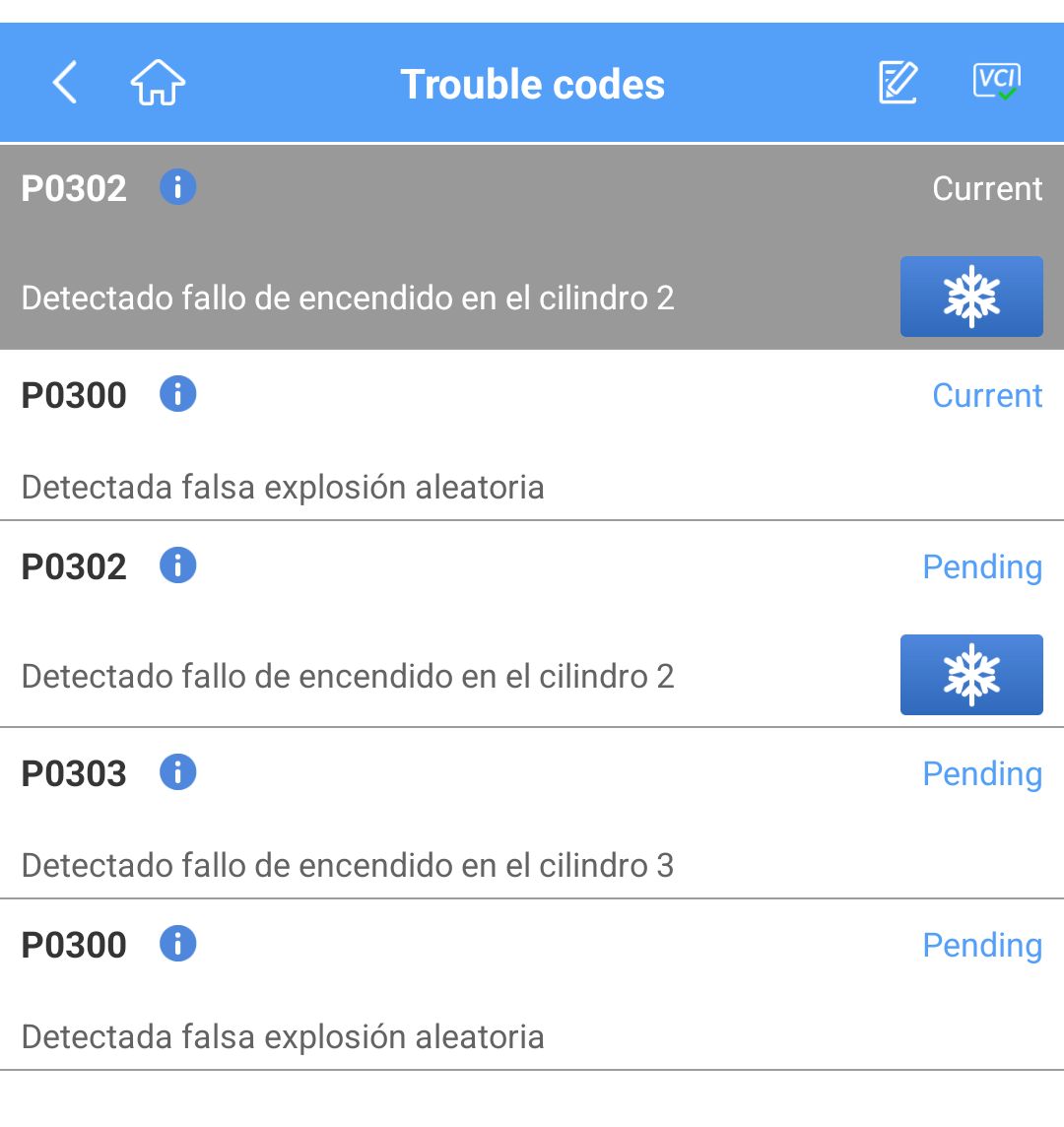
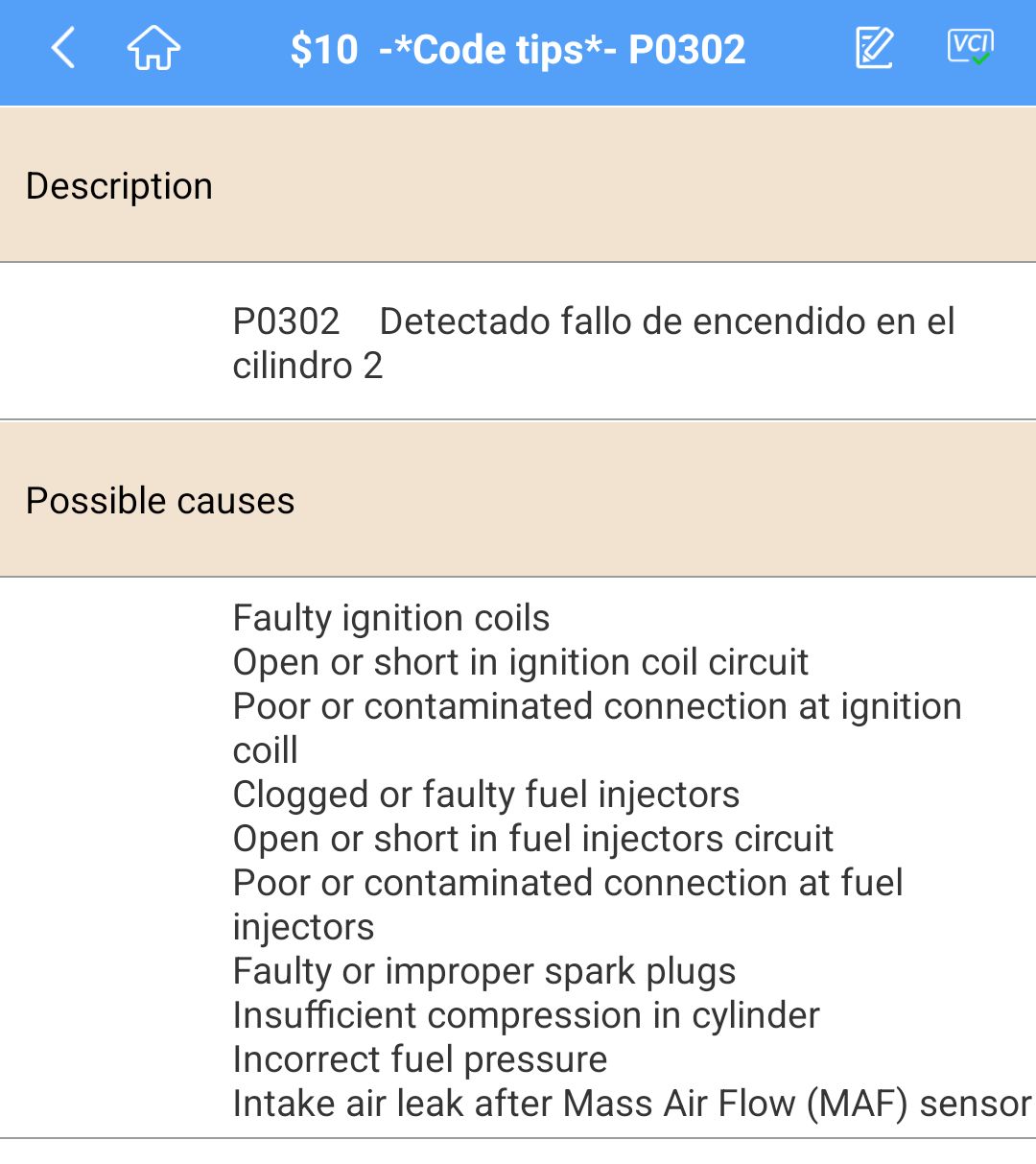
I bought an Autel scanner to check the codes, and these came up:
Possible causes according to the OBD:
• a) Faulty ignition coils
• b) Open or short circuit in the ignition coil
• c) Faulty or contaminated connection in the ignition coil
• d) Clogged or faulty fuel injectors
• e) Open or short circuit in the fuel injectors
• f) Faulty or contaminated connection in the fuel injectors
• g) Faulty or unsuitable spark plugs
• h) Insufficient cylinder compression
• i) Incorrect fuel pressure
• j) Intake air leak after the Mass Air Flow (MAF) sensor
After watching several videos about this fault (there are many), the first thing they do is rule out the simplest problems:
Coils (a) - you take them out and swap their positions (in my case, cylinder 2 with cylinder 1), clear the code, and see if the fault now shows up in the other cylinder (it would trigger P0301 in this case).
In one of the videos, that was exactly the problem; they changed the coil and the problem was solved.
In my case, P0302 kept popping up, so it’s not the coil.
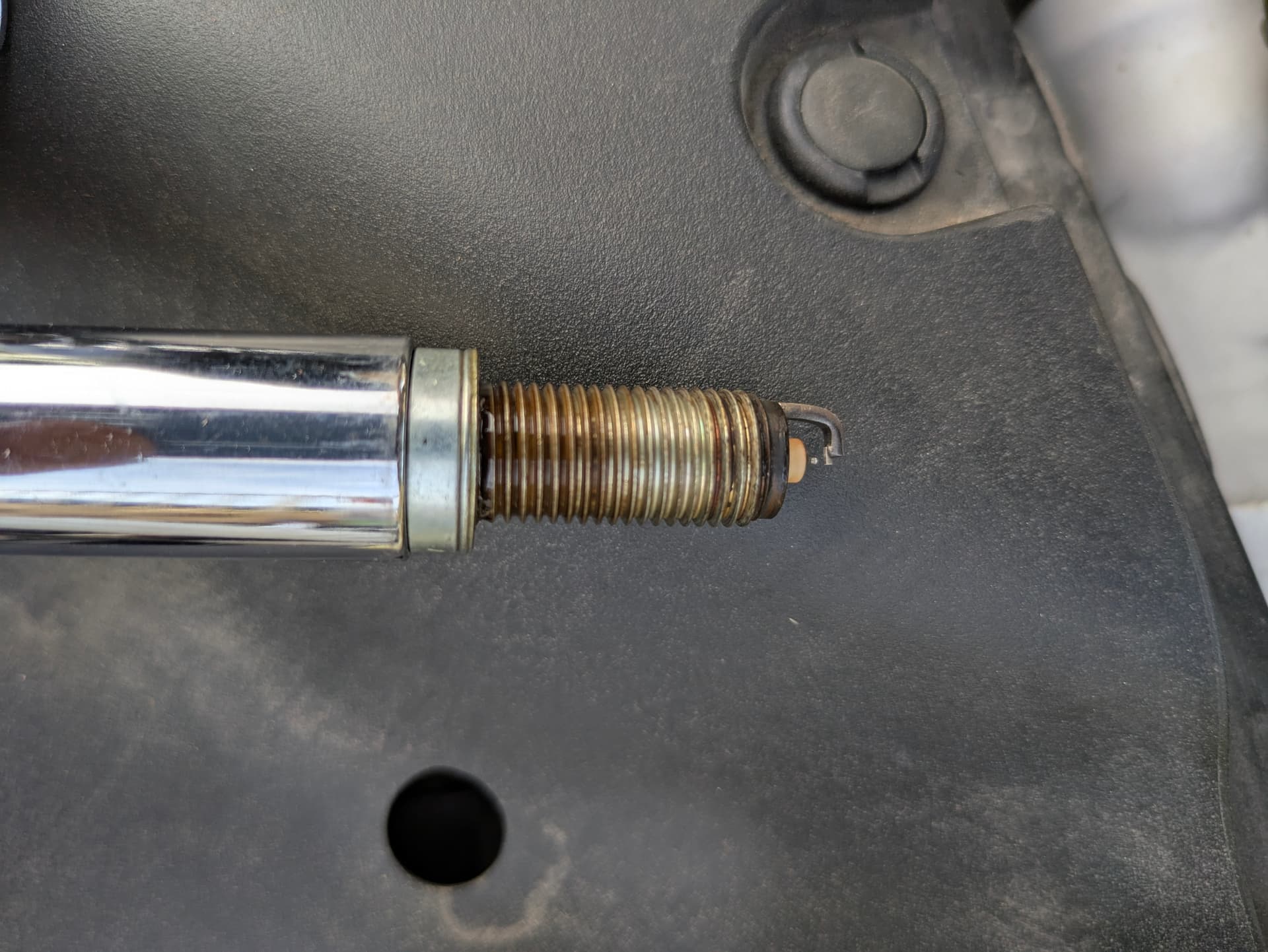
Spark plugs (g) - same thing: remove, inspect, and swap positions to see if the fault moves to another piston. Not my case either, as I replaced all 4 after these faults started appearing. They are replaced at 120,000 km.
In another video, they fixed the problem by installing a new spark plug.
I took it to the dealership in Almería, they hooked it up to their diagnostic machine, and they only managed to tell me what I already knew: the name of the fault code. I guess so they wouldn’t have to charge me €70 just for that, they checked the spark plugs and saw they weren’t the OEM ones (I changed them during the group buy we did; we installed NGK 91784 Ruthenium instead of the NGK 95112 Iridium). They advised me to put the OEM ones back in “because they weren’t giving the correct values.” They recommended the next step, which I’ve also seen in the videos:
Compression test (h) - to rule out insufficient cylinder pressure.
This is done with a tool that screws into the spark plug hole and pumps in pressurized air. They didn’t tell me what they’d charge, but the tool itself costs about €30 on Amazon and the test is very simple.
Out of all the videos I watched, no Honda failed this test, though it’s the next thing I want to rule out just in case—but I need to find a shop that won’t bleed me dry.
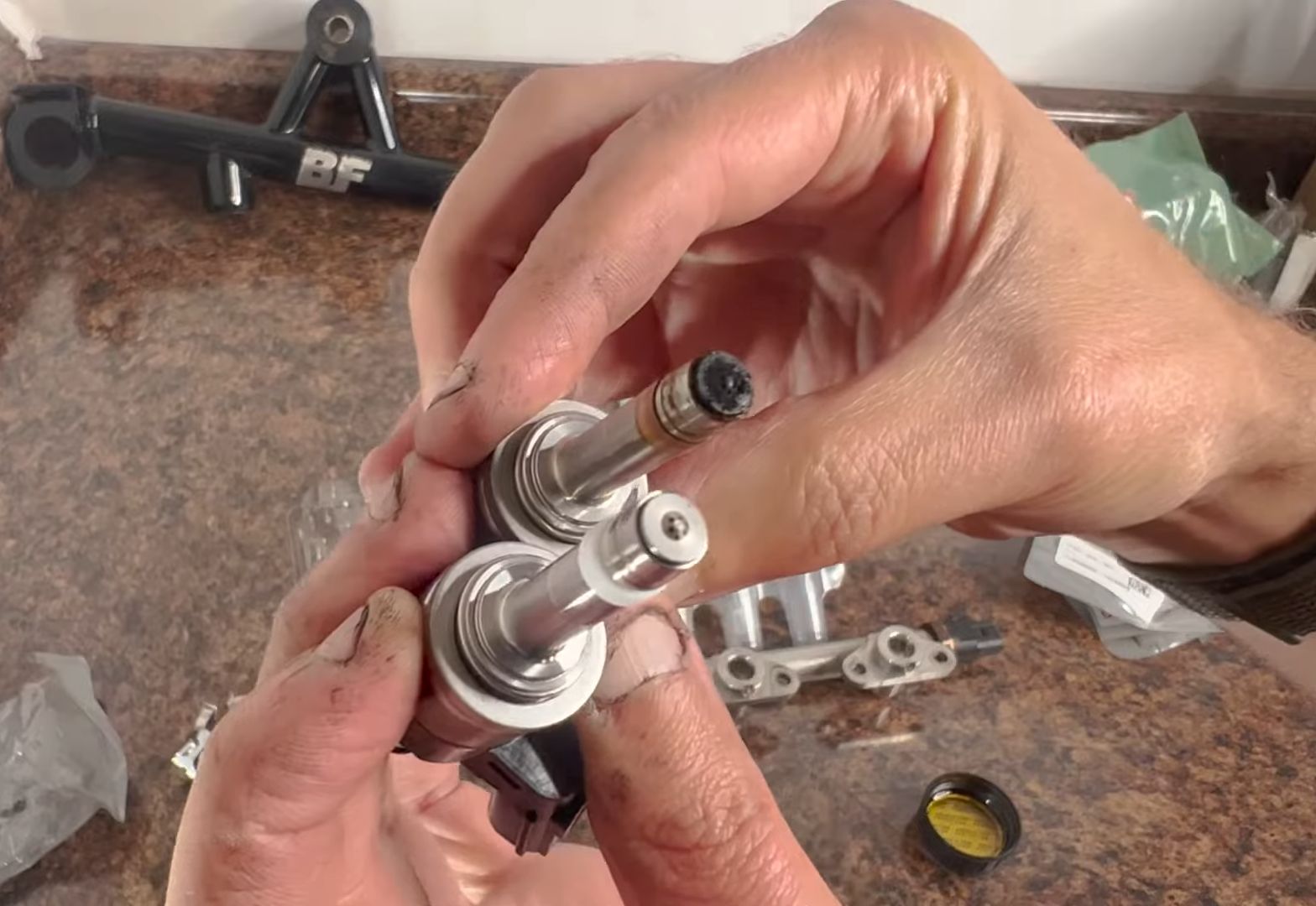
Injectors (d)
On the American CivicX forum, there are tons of people who had to replace the injectors, especially if they’ve passed 100k km like I have.
One way to detect if it’s the injectors is to monitor the “fuel trims” with an OBD reader. If the LTFT (Long Term Fuel Trim) is between -10% and -20%, it’s supposedly the injectors.
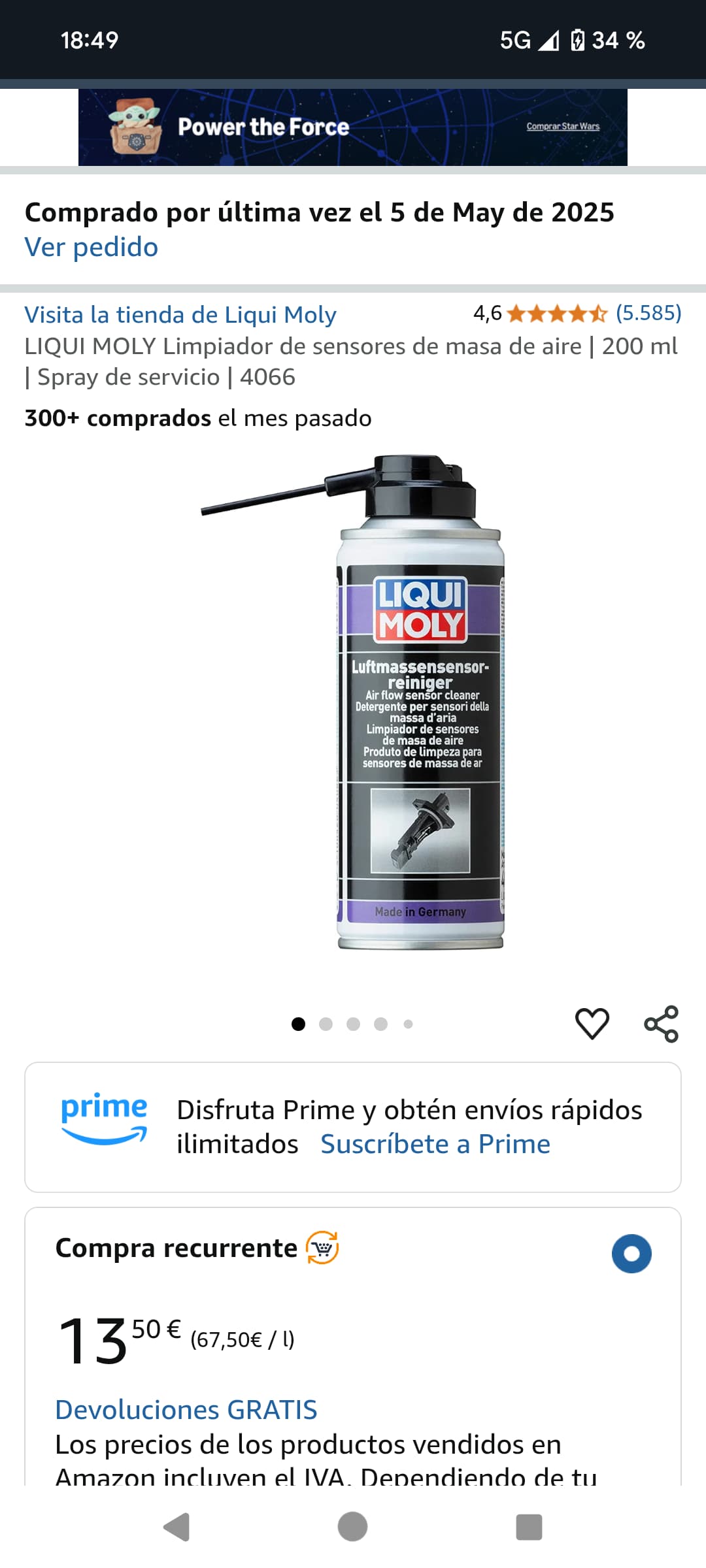
It could also be the wiring (one guy had a rat bite through his cable ), the head gasket, the fuel pump (fits with the recall, but my car isn’t included), a dirty or faulty sensor (I’m going to clean the MAF sensor when the cleaner arrives), a bad ECU reading… You end up spending a fortune trying to find the fault.
I’m leaving this here in case anyone else gets this error—hopefully it’s just a coil or a spark plug for you.
Or how to diagnose P0300 codes (301, 302, 303, 304). Post by Derek Robinson on Facebook
Spark plugs, coils, injectors, valve train, head gasket, guide rings.
In this order, these are the most probable causes of misfire in L15 engines.
Spark Plugs
“The spark plug issue is quite obvious; I’ve seen dirty plugs, broken pottery (where it breaks and slips up and down from the electrode when shaken), etc. If the misfires only occur under high load, high boost pressure, or in cold climates, the preset plug gap might be too wide. In that case, reducing the plug gap to 0.020-0.025” will solve the problem."
*They cost 20-26€ at autodoc.
Coils
“There’s nothing mysterious about them. The coils fail, and you can diagnose them by moving them to another cylinder to see if the misfire moves with them.”
*At autodoc, they cost about 60€.
Injectors
“This is a more complex topic. Injectors can fail intermittently or completely, and they are very difficult to diagnose. I’ve seen faulty injectors that only cause mild misfires at high speeds/engine loads, and I’ve also seen them get completely stuck closed (sealing off an entire cylinder) and fail to open (hydro-locking the engine).
The injector failure is a very common problem, and mechanics often incorrectly diagnose it as plug/coil issues. Ignoring a faulty injector can lead to many other problems, such as the ones mentioned below.”
*At the dealer, they cost about $1000-$1700 in the USA. There are YouTube tutorials on how to replace them yourself, although it requires some guts .
Honda changed suppliers after seeing that the injectors were failing, and the reference number has changed slightly:
16010-5PA-3050 - old reference
06160-5PA-3050 - new reference, comes with the high-pressure line, which apparently deforms once it’s removed.
Valve Train
“Some engines tend to increase valve clearance over time (the valve sinks further into the head due to valve seat wear). This causes a loss of compression, as the valve remains slightly open all the time. This worsens as the engine temperature rises.”
Head Gasket
“Now that the L15 has been around for some time and has undergone excessive use and abuse over thousands of kilometers, I’ve seen head gasket leaks in stock cars, slightly modified ones, and heavily customized ones. It seems to be more frequent in cars that have been used at high temperatures in the past or subjected to high load generating engine torque at low RPM (something that many turbocharged ethanol users seem to prefer).
The surface finish of the L15 blocks/cylinder heads is quite poor, and the cylinder head bolts fatigue, which allows combustion gases to leak into the cooling system. This creates an irrigation path for coolant and combustion gases.
When cold, the coolant circulates through this path and accumulates in the cylinder, where it burns upon starting, making the car sound like a Subaru when starting cold for a few seconds until the coolant burns off (at which point significant misfires can be observed). This, of course, leads to increased coolant consumption. If left unchecked, this will worsen, potentially damaging other components.
The solution is, of course, to replace the gasket (new Honda OEM), machine the head to a much finer roughness with a good mechanic, and use ARP 271-4701 head studs (yes, the ones designated for a GSXR 1300).”
In addition to confirming that the car is losing coolant every week, another sign of a head gasket is white smoke from the exhaust when starting or vibration in the engine.
You can take off the spark plugs and pass a handkerchief over them to see if the pistons have blue coolant (which means coolant is definitely leaking).
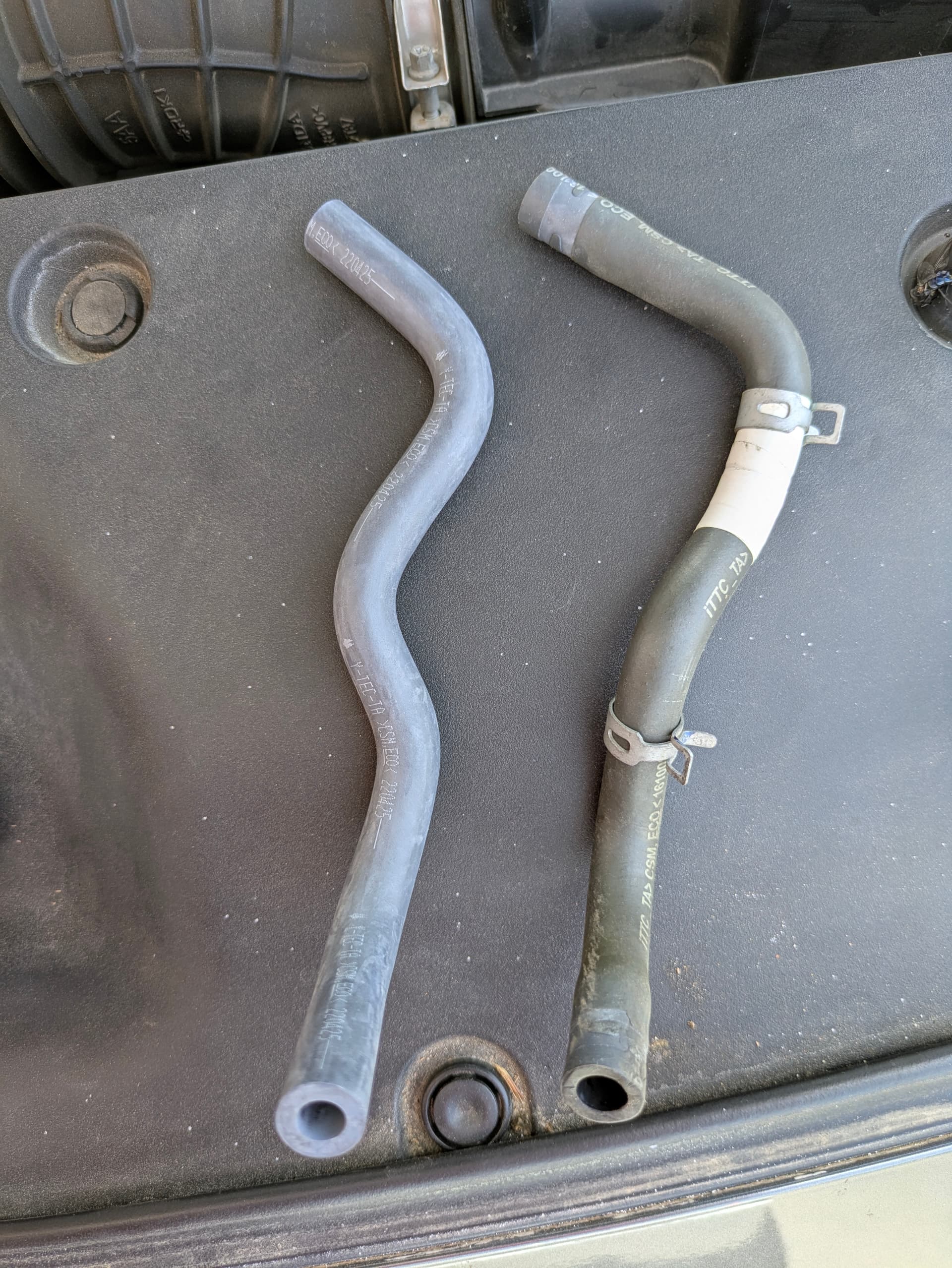
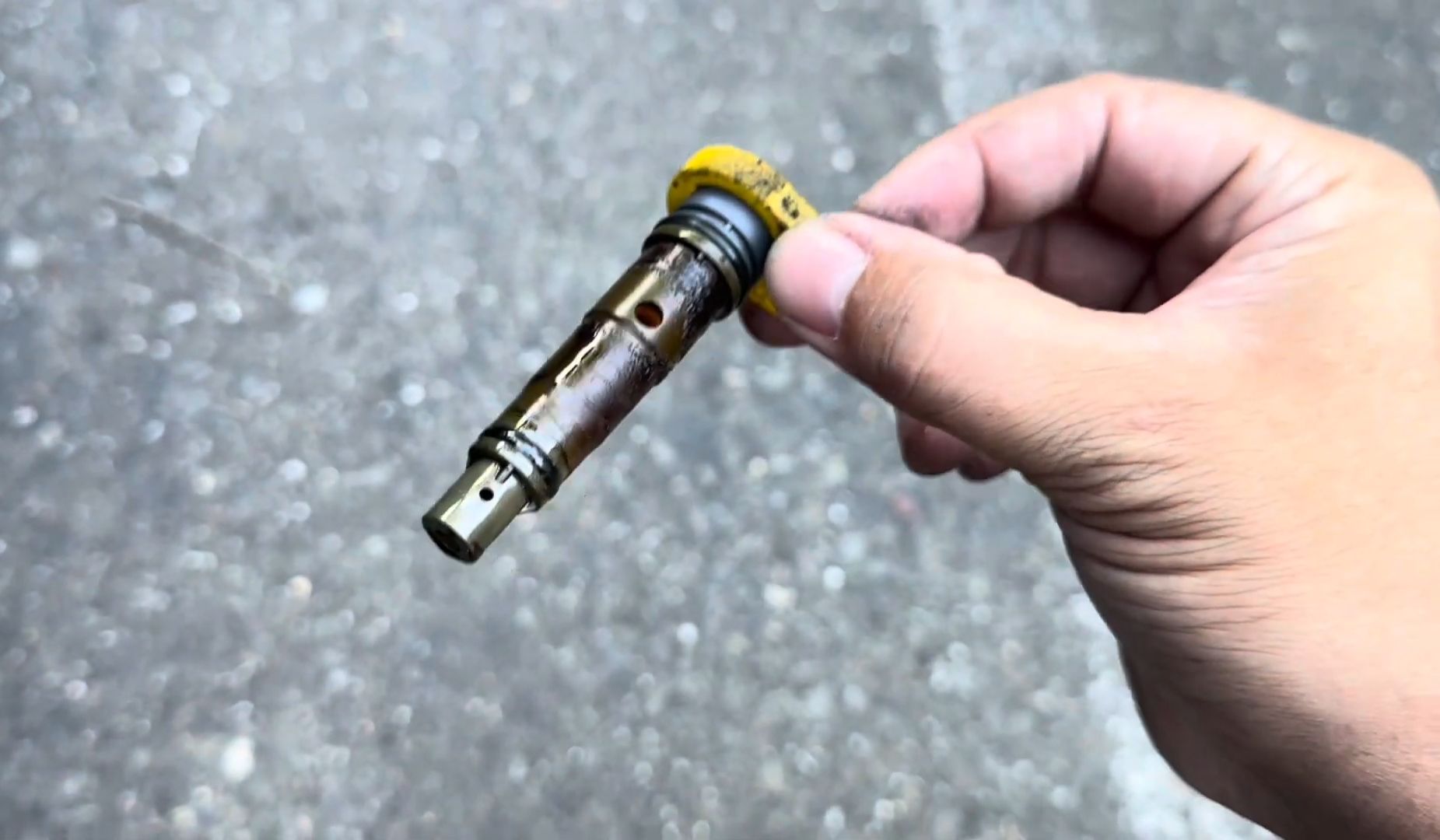
I also add, besides the MAF sensor (k), the PCV valve (l1) and the PCV valve hose (l2).
It is usually replaced since it is cheap, and it can also be cleaned with MAF sensor cleaner (some clean it with a contact cleaner that leaves no residue).
To check if it is defective, remove it and shake it to see if it makes a noise. If it doesn’t make any noise, then it needs to be replaced.
I suspect this is the issue since the other day when installing the stock spark plugs, they had oil on the thread, but only there (it could also be the valve cover gasket).
"The other issue was that my pcv vacuum pipe had softened/dissolved and split. I can only assume that the oil dilution issue with e10 petrol caused it.
…the materials that make up the pipe are oil rated, but not fuel rated. Whilst Honda might say the fuel system is rated for e10 petrol, the breather system is not. Over time, the oil dilution issue means that the pcv system is exposed to fuel vapour and this caused my pcv pipe failure."
That was written by a British person, I doubt they have issues with oil level rising due to gasoline leaks like Canadians and people from Alaska do, as we mentioned on Telegram.
All direct gasoline injection engines experience oil dilution due to the way they inject fuel. But if it happens to everyone, it’s not something exceptional, and it’s understood that then the tube would break for everyone at X kilometers.
Rubber cracks and breaks due to many factors (including gasoline), but also due to repeated thermal shocks, or that person may have used a different oil, or not respected the changes and had more accumulated fuel than usual.
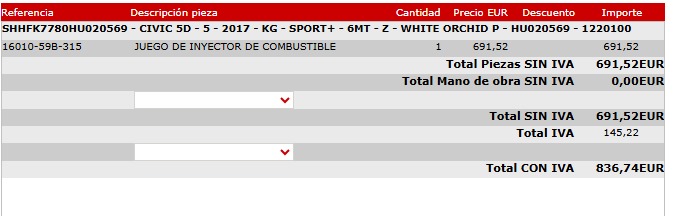
It seems to be the injectors… I recently changed them because I was experiencing the same issue as you… since then, I haven’t had any more problems. Honda quoted me about €900 for the kit, and I had to go along with it. It’s expensive… I haven’t received the invoice yet, but it’s going to hurt…
Recalling, I remember that in my Citroën Xsara they also broke down, a 1.6i with 90 HP. Of course, we’re talking about '90s technology, but even so, I remember they blew about 40,000 pesetas of the time, 240 euros which, adjusting for inflation, are like 400 euros. I couldn’t sit down for a couple of months… you know what I mean…
Morrillu: well, it would hurt me just as much today as it did back then…
 ), the head gasket, the fuel pump (fits with the recall, but my car isn’t included), a dirty or faulty sensor (I’m going to clean the MAF sensor when the cleaner arrives), a bad ECU reading… You end up spending a fortune trying to find the fault.
 .
.
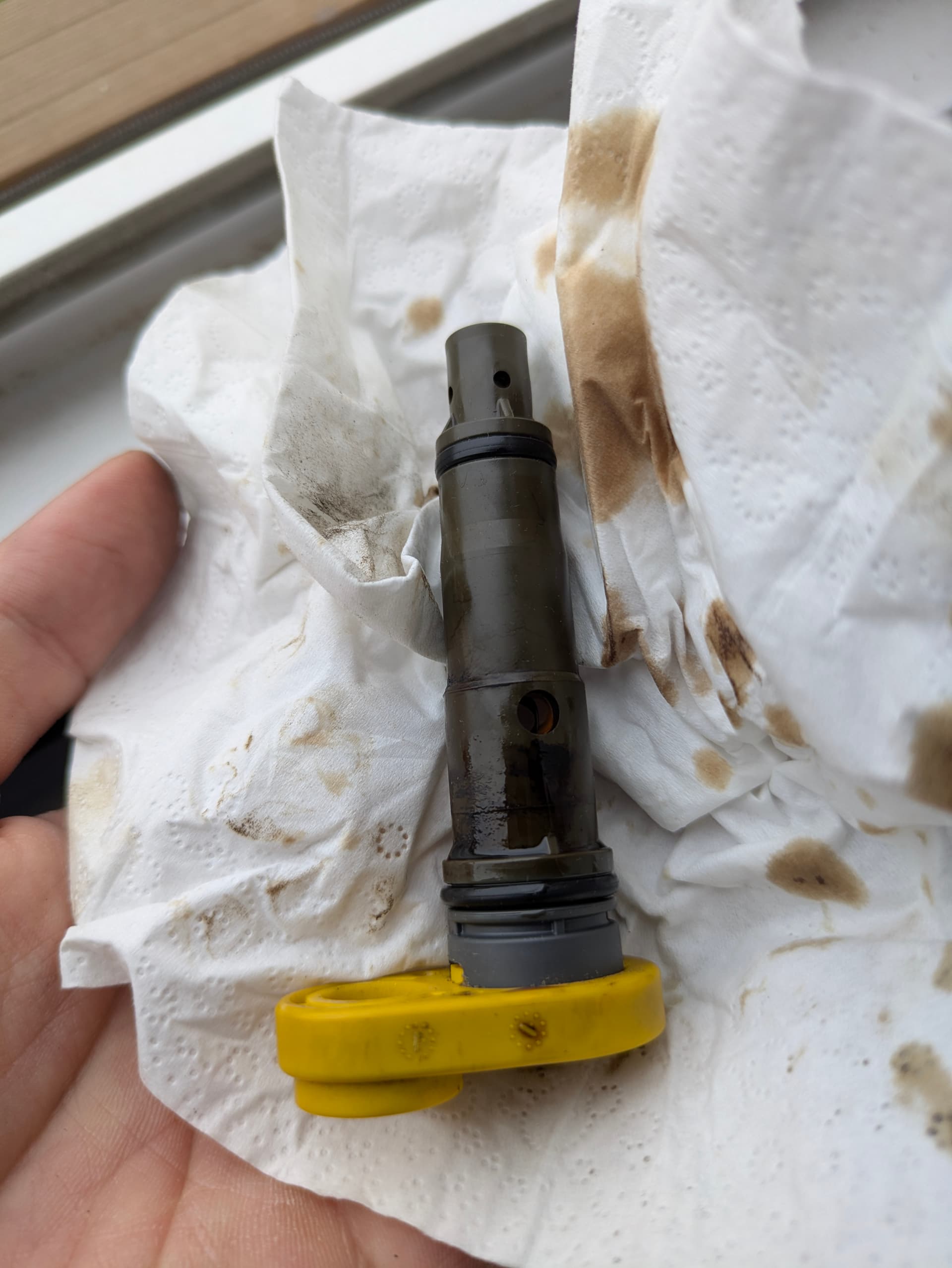
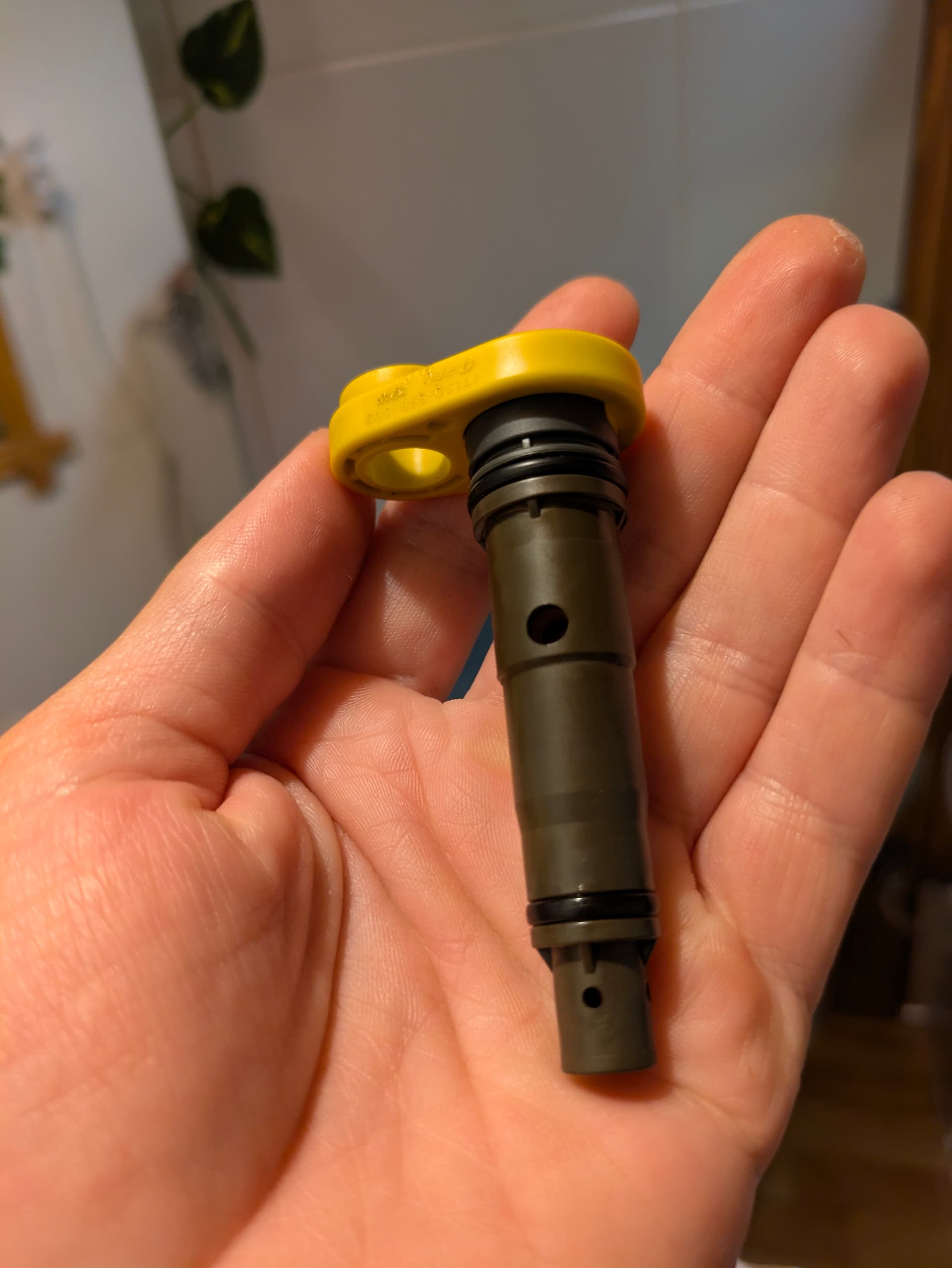

 I have cleaned the MAF sensor and the issues persist.