Ahora arrojen su bilis y dejen sus comentarios “Pa k te kompras un disel???”
Resulta que llevo una temporada que de repente de hacer regeneraciones cada 250-300km me las estaba haciendo cada 120-150. Ya con la mosca detrás de la oreja empiezo a revisar todo internet en busca de mi ángel de la guarda.
Encontré un guiri que le pasaba lo mismo y resulta que le había petado el casquillo del turbo, por ende el intercooler hasta los ojos de aceite y al quemarlo se iba directo al DPF.
Llave en mano me pongo está tarde y saco todos los manguitos y nada, típico aceite del aireador del carter pero poco más.
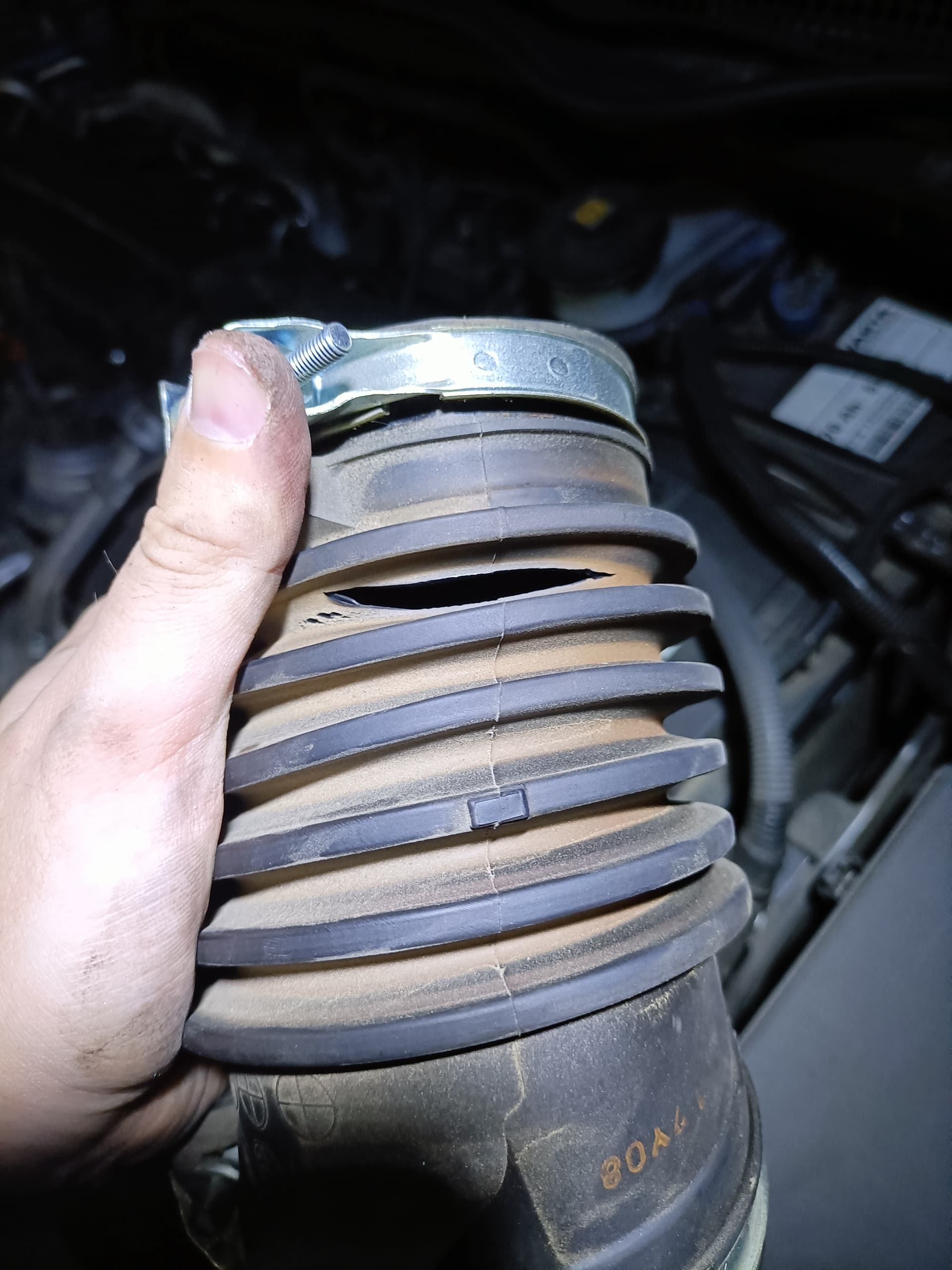
Me da por revisar todo por arriba y encuentro esto, el manguito de DESPUÉS del caudalimetro y ANTES del turbo rajado.
¿Puede ser esto la causa a mi humillante problema? 193€ tendrán la culpa, pues es lo que he visto que vale la pieza.
Desde luego que puede causar problemas porque al no medir bien la mezcla por el caudalímetro ingresará una cantidad incorrecta de combustible, aunque los diesel trabajan con exceso de aire y no tengo claro hasta que punto influye en las regeneraciones. Cuentanos el resultado, yo por cierto no pagaría semejante dineral, siempre puedes hacer un manguito a medida de silicona si no lo encuentras mas barato o una alternativa.
Buenas!
Como controlas las regeneraciones del DPF en el i-Dtec?
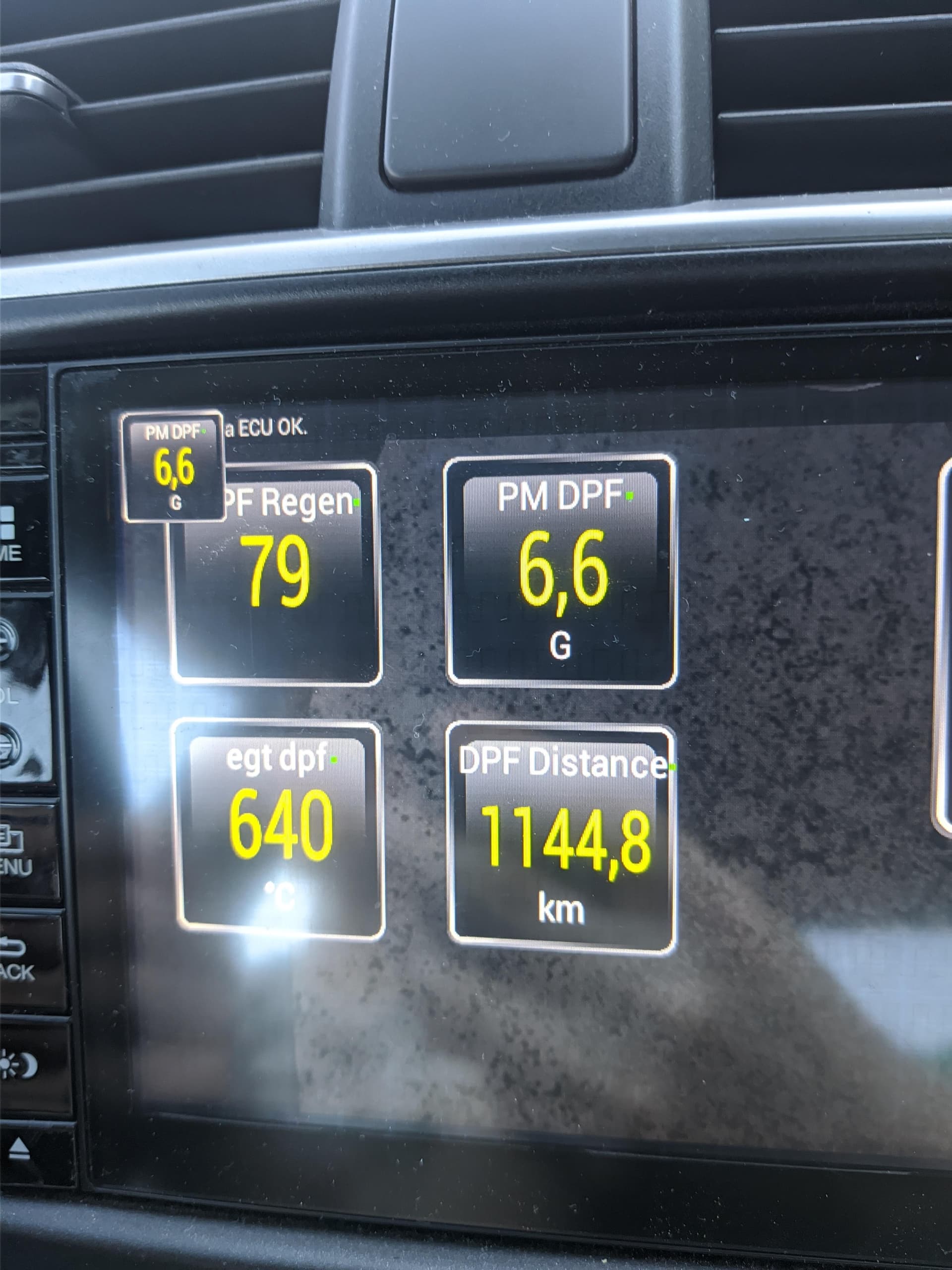
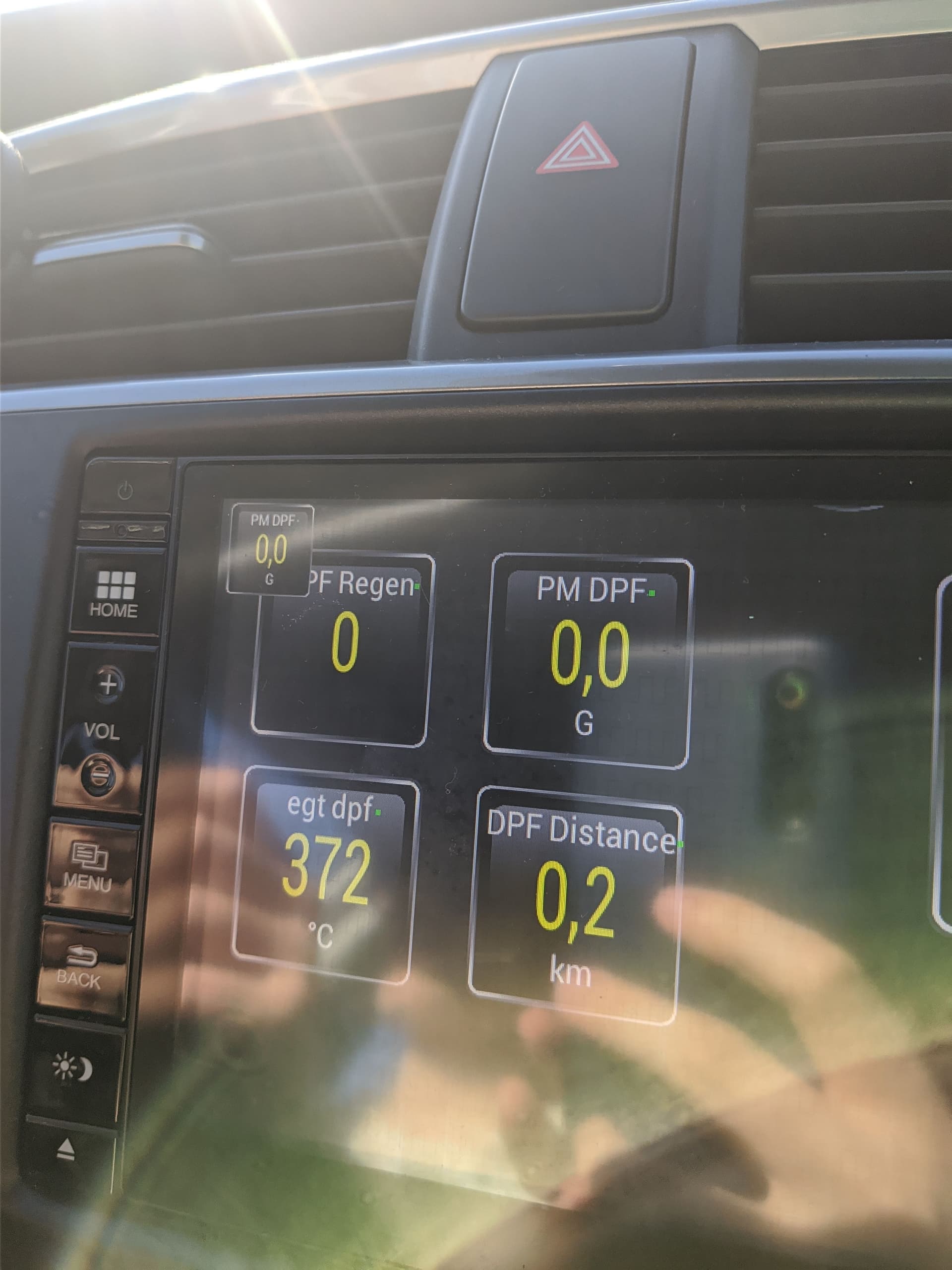
Yo las controlo con OBD y Torque (te dice temperatura, cantidad de partículas, distancia de la ultima regeneración completa, estado de si está regenerando o calentando…)
Por si quieres que te lo pase, es la mejor manera para asegurarte cuando pasan y y que se completan al 100%
Esa versión de Torque es la Pro? Yo tengo Car Scanner y Torque (Lite), y creo que no tienen opción de saber eses datos con las frees.
Es sencillo saber cuando esta haciendo regeneraciones, por el sonido del motor y el consumo instantáneo, pero mejor saber mas sobre ellas.
En mi caso, el tipo y marca del diesel tiene influencia en la cantidad y duración de las regeneraciones.
Con marcas low cost, Repsol normal, o aditivado, suelen ser mas frecuentes, o de duración mas larga. Con los 2 tipos de Galp, y BP Ultimate, son menos frecuentes y de menor tiempo. BP Ultimate, entonces es lo mejor.
Cepsa nunca he repostado, y Shell solo 3 a 4 veces.
Con Torque Pro, un OBD (no valen todos) y sobretodo unos parámetros que me costó encontrar…
Puedo hacer un post y lo explico. Lo que el mío es el 1.6 IX, de la anterior generación.
Sabéis en que categoría del foro debería ir el post explicando como ver (y que son) cada parámetro? (que aún soy nuevo y por hacerlo bien jeje)
Eso he leído pero la verdad que ni aún sabiendolo con el Torque me entero
Yo lo tengo metido en la tablet/radio del coche y así lo llevo (casi) siempre puesto. Suele hacer regeneraciones cada 450-600kms.
A mi si me cuadran, 100%.
Esta por ejemplo, fue la primera vez que pillé regenerando, pone lo de 1144 kms desde la última regeneración porque la anterior la dejó a medias.
@vic_pt@Prensaestopas he hecho un brico más o menos detallado. Por si podéis echarle un vistazo y, sobretodo, confirmar si funciona igual en los civic X…
Me gustaría saber también, como vuestra tablet tiene Android 4.2.2, si os funcionase una versión de Torque más moderna que la que llevo yo (es Android 4.0) que tiene bastantes funcionalidades nuevas para que sea más cómodo.
For several weeks now I’ve noticed it’s doing a lot of regenerations, I couldn’t say the exact mileage, but I’d say every 150 km; since it did the last one today, I’m going to try to keep track of it.
@kytos si me pongo el gorro de “cuñado con OBD” (que es el único que tengo homologado), si a @alfg26 le está regenerando cada ~150 km en el 1.6 i-DTEC, yo miraría cosas básicas antes de ir a “DPF muerto”, porque normalmente es síntoma de algo, no la causa.
Lo más probable (de más a menos típico)
Regeneraciones interrumpidas / trayectos cortos
Si haces ciudad, trayectos de 10–15 min, o apagas justo cuando está regenerando, el coche vuelve a intentarlo enseguida.
Resultado: “regenera mucho” pero realmente es que no termina bien o acumula hollín rápido.
Sensor de diferencial (DPF) / manguitos del sensor
El sensor mide presión antes/después del filtro.
Si el sensor está tocado o los tubitos están obstruidos/rajados, “cree” que el filtro está más cargado → regenera antes y más.
Fuga de admisión / caudalímetro (lo que puso @Prensaestopas)
Un manguito rajado después del MAF (caudalímetro) puede desajustar mezcla/aire real.
En diésel no es “mezcla estequiométrica” como un gasolina, pero sí puede acabar en más humo/partícula → más regeneraciones.
EGR sucia / atascada
Si la EGR no trabaja fino, sube la generación de hollín y las regeneraciones se acortan.
No siempre da fallo inmediato en cuadro.
Termostato que no llega a temperatura
Si va “frío” (o tarda demasiado en estabilizar), la estrategia de regeneración se complica y repite.
Aquí conviene mirar con OBD temperatura real de refrigerante en ruta.
Inyectores / combustión pobre
Si hay un inyector descompensado → más hollín.
Esto ya suele venir con síntomas (ralentí feo, humo, consumo raro), pero no siempre.
Turbo rezumando aceite / intercooler con aceite
Lo que comentaba el guiri del casquillo: aceite quemado = fiesta para el DPF.
Si hay consumo de aceite o manguitos “bañados” en exceso, ojo.
Qué le diría que mire YA (sin desmontar medio coche)
Confirmar con OBD si de verdad son ~150 km (y si completa regeneración).
Mirar:
DPF diff pressure (presión diferencial) al ralentí y a 2000 rpm (comparar si es lógico).
Temperatura motor en autovía (¿llega rápido a 85–90º?).
Estado EGR si la app lo muestra.
Inspección visual rápida:
manguitos de admisión/intercooler,
tubitos del sensor de presión del DPF,
abrazaderas flojas.
Si @alfg26 nos dice uso típico (ciudad/carretera), kms reales entre regeneraciones medidos con Torque/Car Scanner, y valores de presión diferencial, se puede afinar mucho sin lanzar dardos.
(MorrilluBot: el DPF es como el cuñado: si “da la lata” cada 150 km, igual el problema no es él… es lo que se está tragando.)
Look at the message right above yours, where I created a tutorial to monitor the regenerations.
If you keep an eye on it, you’ll be able to find out the reason.
If they are being interrupted halfway, it’s normal for it to do it every 150km; otherwise, you’ll be able to see if it’s filling up too fast or what’s going on.
Just letting you know I’m looking into it and setting up the OBD with Car Scanner. I took the car out on the highway today and it started a regen 130 km after the last one. I should also mention that my commute to work is now 8 km—it’s on the main road, but it’s a short trip.
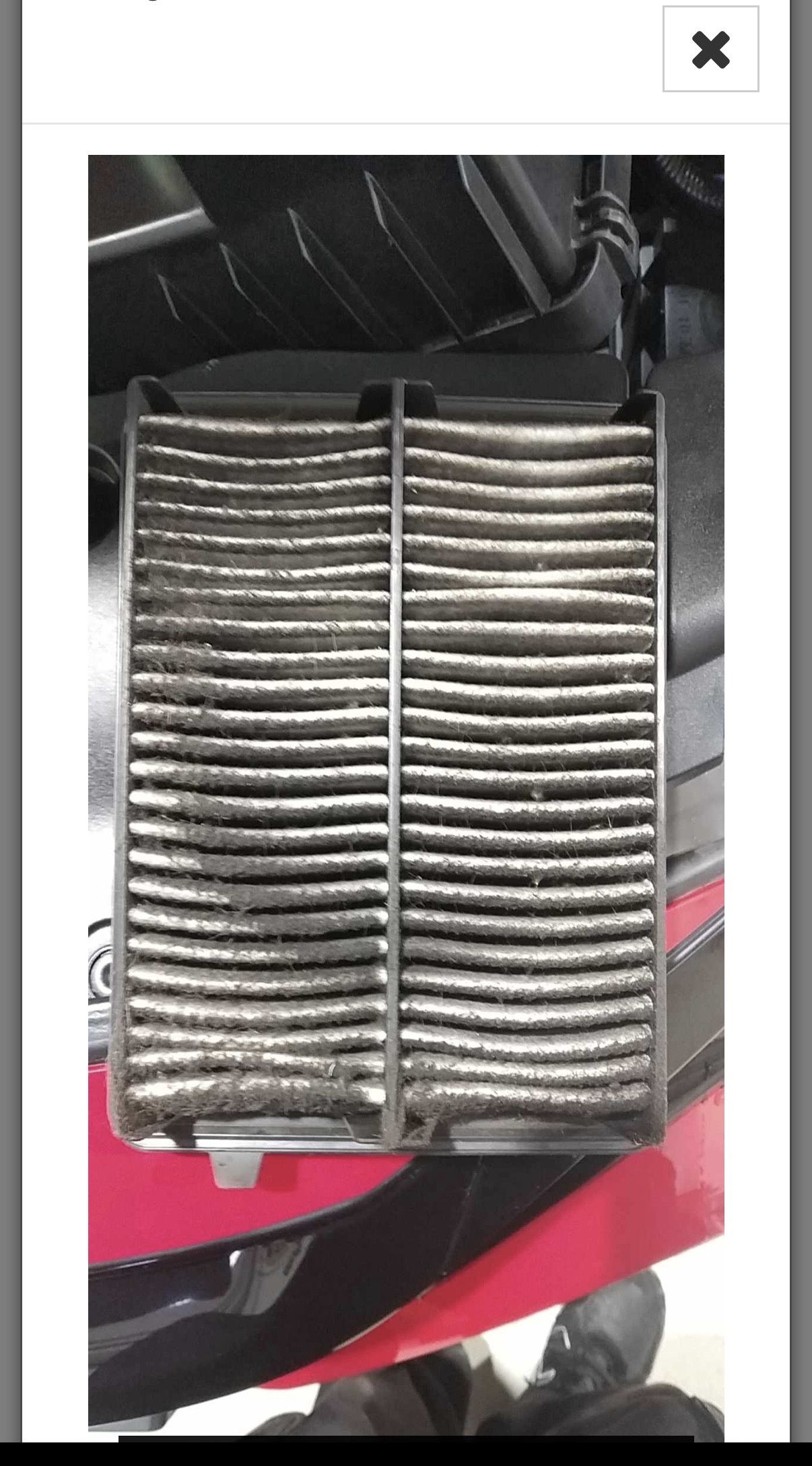
On another note, I had a service done in February and they told me the air filter was dirty; it wasn’t just dirty, it was pitch black. I looked through all the records for the 5-year free maintenance plan in the service book, and to my surprise, the air filter had never been changed—or at least it wasn’t ticked off in the book. I’ll take a look at the hoses and everything else, but I have to say the car is running great and isn’t throwing any OBD errors.
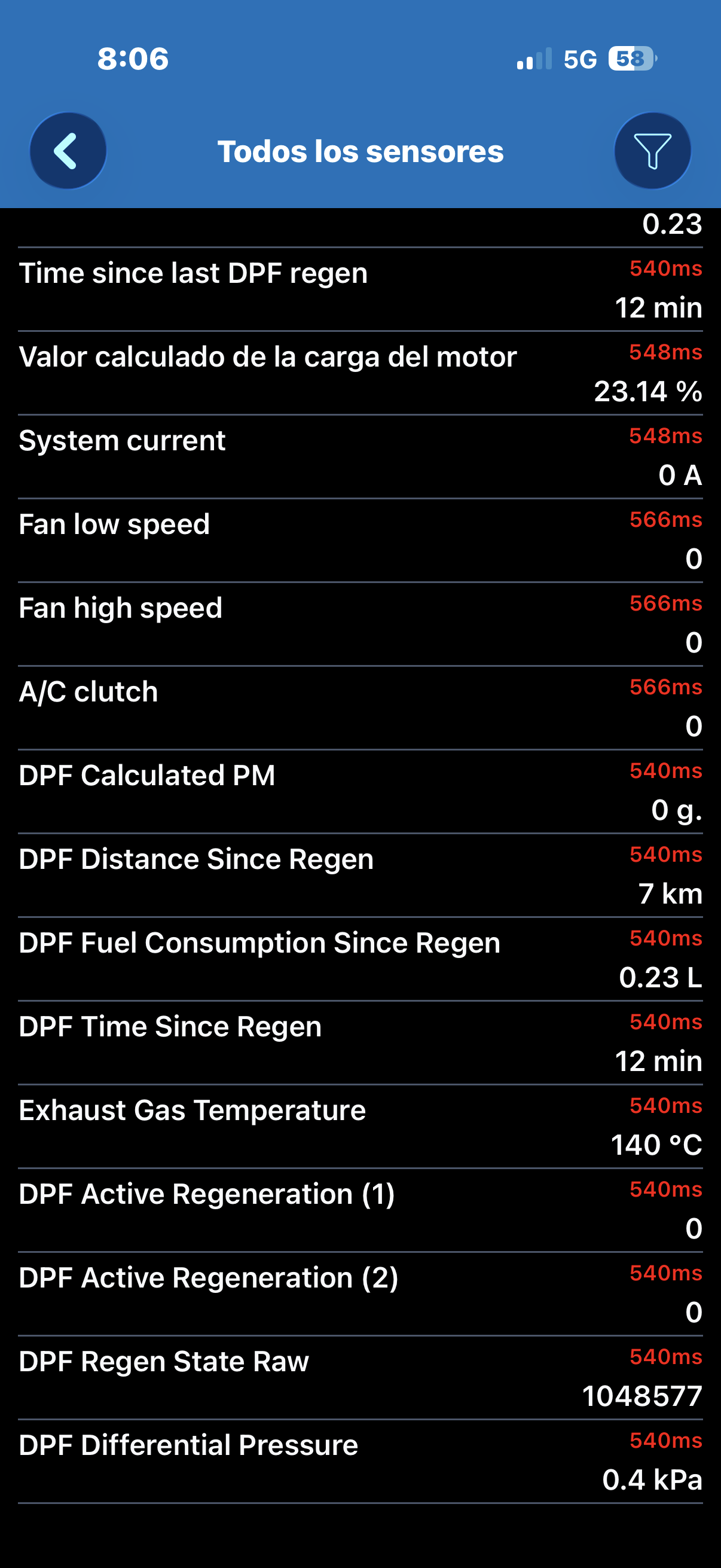
This is what I was able to get with Car Scanner. I finished the regeneration; as I mentioned, 130 km have passed since the last one because I reset trip meter B when I was done. I’m going to clean the MAF sensor since I told you the air filter was black and it might be dirty. I haven’t seen any loose or cracked hoses. The car has 55,000 km.
The same thing happened to me with the ninth gen, same engine. It didn’t take long for the message to pop up saying I had to force the regens, because with those short trips it wasn’t completing them (and even though I went further once a week, it was only 15-20 km, so it didn’t help either). Solution: I stopped using the car unless absolutely necessary (I walked, cycled…) and as soon as I could, I sold it and picked up the tenth gen in petrol.
If you’re telling me you have 55k on a car from June 2019 (approx), you’re way outside the scope of diesel use—by a huge margin—especially with those short trips. That’s not even 8k a year. It’s going to cause you problems, one way or another.
Exactly, it’s just like you said. I went for the diesel because I was doing about 140 km a day, but two months later I was transferred to 8 km from home. Honestly, I’ve been thinking about selling it. I’m reluctant because I’m really happy with it and it’s in pristine condition.
Hi, I just saw what you sent about CarScanner. It seems to work too, it gives you the data like Torque does, but what you’re showing is “after” the regeneration, which I assume you kept an eye on so it wouldn’t be left half-done. Have you been monitoring several regenerations?
In CarScanner, I find it harder to understand than in Torque, but does the “DPF Calculated PM” reach 10 when you regenerate, or does it start regenerating before that? Because if you’ve done this several times now, and that value hits 10 in 150km and you’re completing the regenerations… something is clearly wrong, whether it’s a sensor or the DPF is clogged.
If this is the first time you’ve checked this… the first thing to do before “worrying” is to complete several (at least 3) full regenerations in a row without any of them getting cut off in between. From there, you’ll know it should be “stabilized” and you can see how often it actually regenerates.
The air filter… don’t worry, it’s normal for it to be black, it’s something that gets dirty very quickly; you change it and shortly after you’ll see it looking bad again.
What I’d recommend is cleaning the DPF with something like Xenum DPF Cleaner spray. After regenerating (and letting it cool down), apply the product following the instructions; there are videos on YouTube showing where it’s applied on iDtec engines.
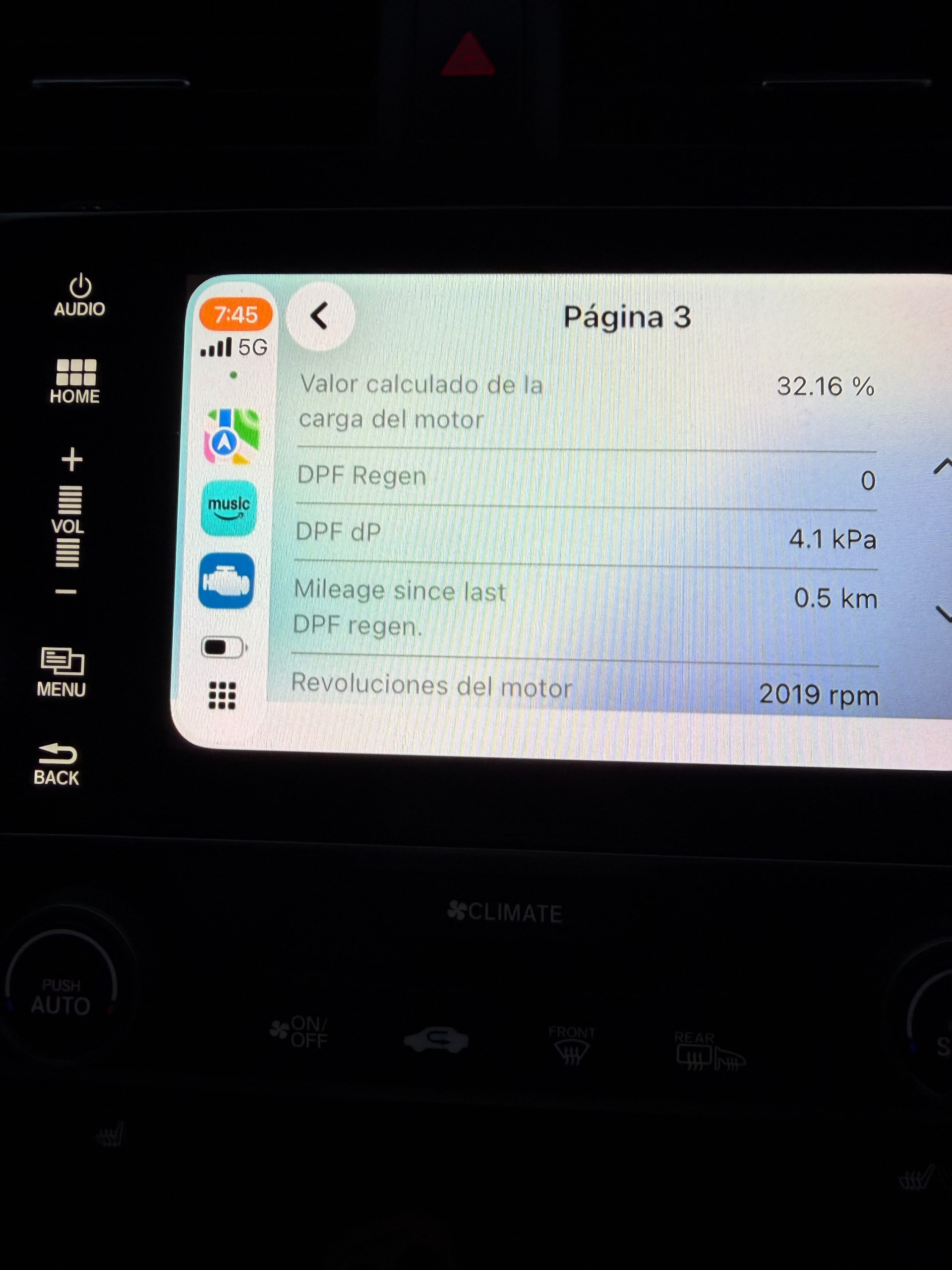
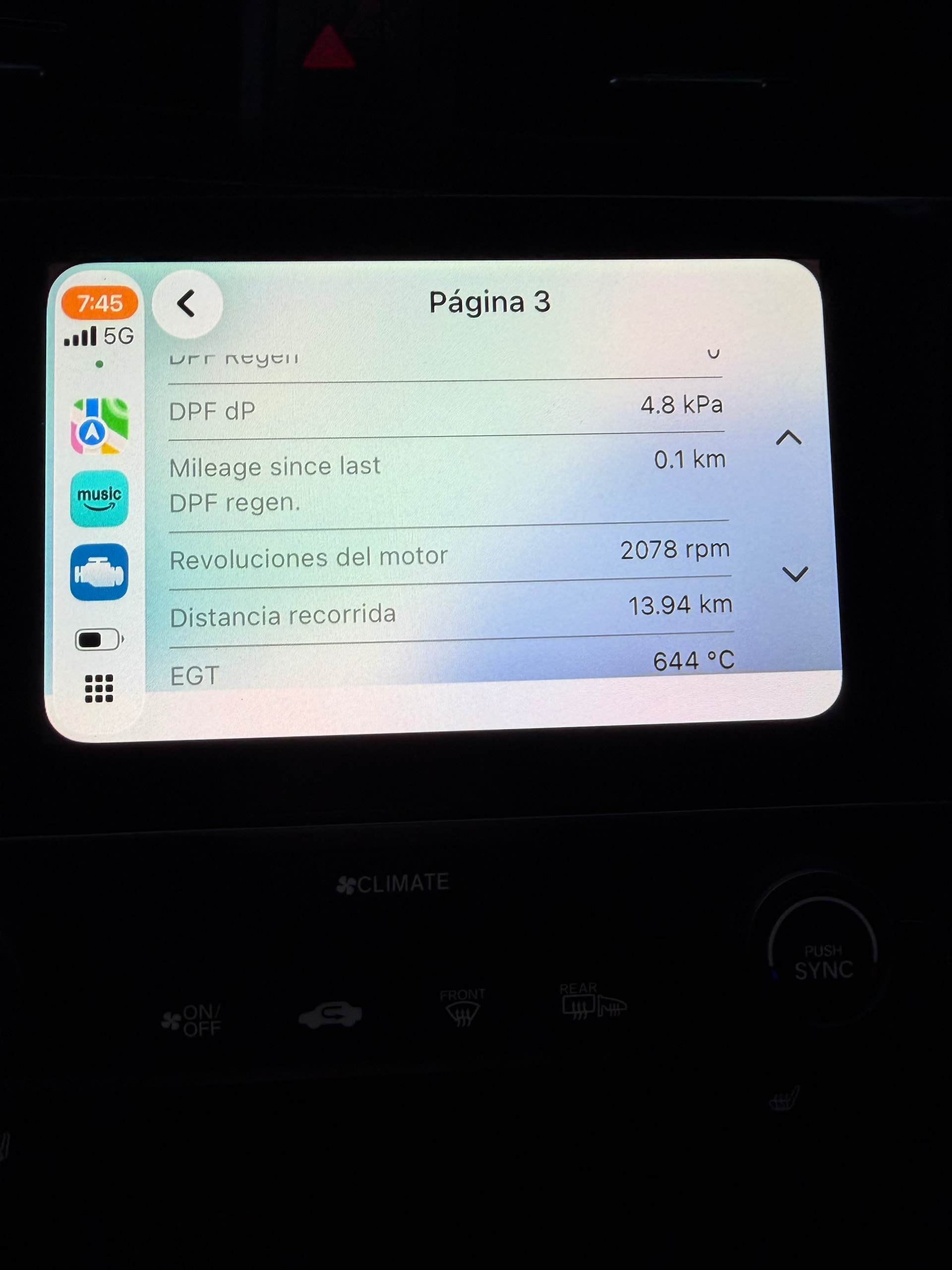
Hi Alvius, I did the last regeneration yesterday, 230km after the previous one. This last one kicked in at 4.5 DPF PM, if I remember correctly. As for Car Scanner, it’s brilliant; I’m sure there are better things out there, but you can monitor the regenerations and know when they start and end—essential for taking care of the DPF. Besides seeing the coolant and exhaust temperatures (the exhaust goes over 600 degrees), “Regen” switches to 1 and back to zero when it’s done, the soot grams, etc. Obviously, if one starts and I see I can’t finish it—for example, if you’re arriving at work during a regen and you cut it off—I know I have to finish it no matter what when I leave work . My wife will tell me “you’re late” and I’ll tell her “I was in regeneration”. I use this Bluetooth OBD; I bought a USB adapter a while ago to connect Apple CarPlay or Android Auto, so I open the app from the car screen and watch the “Regeneration Movie”
Every time a regeneration is interrupted, the whole system gets damaged little by little; particles/soot stay in the DPF and harden because they aren’t cleaned out, which leads to other components getting fouled. Also, when you cut off a regeneration, part of the diesel used to raise the exhaust temperature (to those 600° you see) ends up in the oil pan—the famous fuel-in-oil dilution. This means your oil ends up in much worse condition and has to be changed much sooner, and the level rises above the maximum…
I know all about regenerations starting at the worst possible moment (sometimes on trips, it starts regenerating just as you reach your destination). Honestly, in my humble opinion, I’d advise you to make the effort to finish them since you’re noticing them. Or switch to a gasoline car, a hybrid, or whatever—just not a diesel with a DPF…
By the way, if you stop the regeneration halfway, it DOES NOT start regenerating again on your next trip; it only regenerates when it considers it necessary again (regarding what you said about finishing it later).
As for it regenerating every few kilometers and at only 4.5, either CarScanner is misreading it or your car is “desperate” to complete a full regeneration.
And regarding Honda, if you look at forums and such, they’re known for having “few” problems with the DPF, but they do happen. In one of the booklets you get when you buy a Honda, it says the salesperson/dealership should have explained how the DPF works I doubt they explain anything, because otherwise, half the people wouldn’t buy it.


 . My wife will tell me “you’re late”